Whiteboard Software in Germany: Key Requirements to Consider
Whiteboard software in Germany differs from many global standard solutions in three important areas: data hosting location, GDPR compliance, and integration with existing IT environments such as Microsoft 365, Webex, or Nextcloud.
These criteria often determine whether a whiteboard platform is suitable for public authorities, banks, industrial companies, and other organizations with strict security or compliance requirements.



What Requirements Should Whiteboard Software Meet for Companies and Public Authorities in Germany?
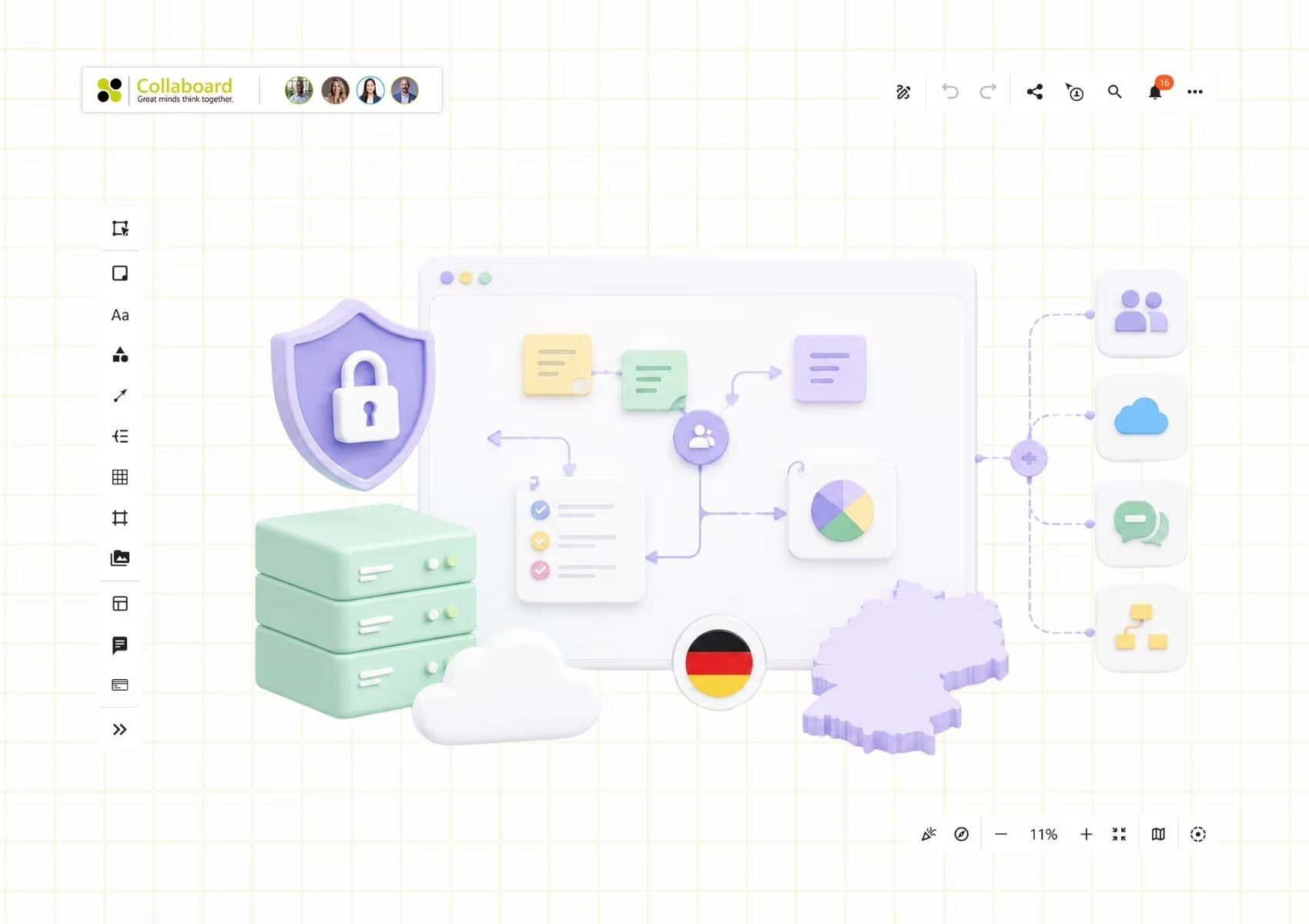
Whiteboard software used by German companies and public-sector organizations needs to meet relevant data protection requirements for hosting and data processing, integrate securely with the existing IT infrastructure, and provide access controls appropriate to the organization’s security requirements.
The GDPR does not generally require data to be hosted in a specific country. However, a Data Processing Agreement (DPA) is relevant whenever a provider processes personal data on behalf of an organization under Article 28 GDPR.
Data Hosting, GDPR, and Data Processing
Server location matters when assessing data protection and international data transfers, but according to Article 3 GDPR, the server location alone does not determine which data protection laws apply.
Providers subject to US jurisdiction may additionally fall under the US CLOUD Act, which can apply to data stored outside the United States if that data is within the provider’s possession or control.
For public authorities, banks, industrial companies, and other organizations with high security requirements, hosting in Germany, Switzerland, or another EU country can therefore remain an important selection criterion. A suitable DPA and up-to-date encryption standards should complement the hosting strategy.
On-premises deployment offers the highest level of infrastructure control because data can remain within the organization’s own data center. Other important GDPR considerations for online whiteboards include data deletion policies, documentation of subprocessors, and encryption of data at rest.
Integration With Existing IT Systems
A whiteboard platform should complement an organization’s existing software environment rather than create another isolated system.
It is therefore important to evaluate how easily the platform integrates with Microsoft Teams, Webex, Nextcloud, Active Directory, and existing Single Sign-On environments.
Organizations already using Microsoft 365, for example, benefit from direct integrations that allow employees to work with whiteboards within familiar workflows instead of constantly exporting and importing content between systems.
Suitability for Regulated Industries
Organizations in regulated sectors such as the public sector, banking, and industrial environments with specific regulatory requirements may need advanced permission management, audit logging, and two-factor authentication depending on their security requirements.
The validity period of invitation links can also be important. Temporary access helps ensure that external participants do not retain permanent access after a project has ended.
Collaboard’s self-hosting options support these types of requirements by allowing organizations to manage roles, permissions, and even air-gapped environments within their own infrastructure.
Whiteboard Software vs. Interactive Whiteboard Hardware: What’s the Difference?
When searching for whiteboard software, you will often also encounter interactive hardware displays from manufacturers such as BenQ or Prowise.
These touchscreen displays belong to the broader category of interactive whiteboards. They typically replace traditional classroom or meeting-room whiteboards and often run their own operating software with a more limited feature set.
Whiteboard software such as Collaboard, Miro, or Mural, on the other hand, runs in a browser across different devices and is not tied to specific meeting-room hardware. It can also be displayed and operated on an interactive touchscreen.
Whiteboard Software Comparison: Collaboard, Miro, Mural & More
The following overview compares seven whiteboard tools based on the criteria discussed above: hosting location, GDPR and DPA support, integrations, and suitability for regulated industries.
A short overview of each provider follows the comparison.
Collaboard
Collaboard is a Swiss online whiteboard platform with selectable hosting locations in Germany, Switzerland, and the Netherlands, as well as a complete on-premises deployment option that can also support air-gapped environments.
More than 350 templates, facilitation features such as timers and presentation mode, and integrations with Microsoft Teams, Webex, and Nextcloud make Collaboard suitable for both collaborative workshops and administrative use cases.
Two-factor authentication, Single Sign-On, and granular permission management complement its security capabilities.
Miro
Miro stores customer data covered by its EU data residency offering in EU data centers by default. Certain features, processing activities, and third-party integrations may still involve processing outside the selected region.
The platform provides an extensive template library and AI-powered functionality and is particularly popular among business and creative teams.
Organizations specifically considering a switch from Miro to Collaboard can compare functionality and data protection requirements in our Miro alternative comparison.
Mural
Mural offers regional data residency for Enterprise customers, including in Europe, and maintains certifications including SOC 2 Type 2 and ISO 27001. The provider also states that it complies with GDPR requirements.
The platform benefits from a close Microsoft 365 partnership and can also be suitable for organizations requiring European data residency.
Our Mural alternative comparison covers the most relevant differences regarding data protection, pricing, and functionality.
Lucidspark
Lucidspark, part of Lucid Software, uses a US data region by default. Enterprise accounts can, however, select EU data residency with data stored in Germany and backups in Ireland.
Depending on the setup, international data transfers may rely on the EU-US Data Privacy Framework or Standard Contractual Clauses.
Organizations with strict EU data residency requirements should therefore verify the selected data region before choosing the platform.
OpenBoard
OpenBoard is open-source software developed by the Geneva Department of Education and the University of Lausanne. It runs locally on Windows, macOS, and Linux.
Because it does not require cloud connectivity, many questions relating to cloud hosting and international data transfers are avoided. However, GDPR obligations may still apply whenever personal data is processed.
The trade-off is that OpenBoard lacks real-time online collaboration and many of the convenience and collaboration features available in commercial whiteboard platforms.
Microsoft Whiteboard
Microsoft Whiteboard is available through an existing Microsoft 365 subscription.
New whiteboards are stored in OneDrive by default, with data residency depending on the organization’s Microsoft 365 environment.
Companies benefit from its direct integration with Microsoft Teams. PowerPoint files can be inserted through OneDrive, while an equivalent native Excel integration is not currently documented.
How to Choose Whiteboard Software That Meets GDPR Requirements
Looking for a whiteboard platform that will not spend months stuck in your legal or IT approval process?
European hosting options and an available Data Processing Agreement can help simplify the compliance assessment of Collaboard.
Try Collaboard for free and evaluate whether it meets your organization’s requirements. Your organization’s own internal approval and compliance procedures still apply.
On This Page

Start for free with Collaboard
Create your first online whiteboard, invite others and start collaborating visually.
You can use Collaboard for free and upgrade later whenever your needs grow.
*No credit card required
Michael Görög
Co-Founder Collaboard
Michael Görög is co-founder of Collaboard and is passionate about digital collaboration, visual work and the future of teamwork. He regularly shares practical insights on online whiteboards, collaboration methods, AI and new ways of turning ideas into action.

.avif)
Frequently asked questions
Any questions? We are here to help.
Collaboard offers a free version with essential whiteboard functionality for up to three boards and five participants per board.
Depending on how personal data is processed, organizations may need a Data Processing Agreement (DPA) when the whiteboard provider acts as a data processor. You should also have transparency regarding subprocessors and relevant data storage locations. Where data is transferred to a third country, the appropriate transfer mechanism should be evaluated. A Transfer Impact Assessment is particularly relevant when Standard Contractual Clauses are used and is not automatically required simply because a provider has links to the United States.
Yes. Collaboard provides German-language support directly from Germany and Switzerland respectively. With internationally operating providers such as Miro or Mural, support is generally provided primarily in English, sometimes supplemented by additional language support depending on availability and support hours.
Collaboard integrates directly with Microsoft Teams, allowing users to open and work on boards within the familiar Teams environment. Depending on the configuration, authentication can take place through an individual account or Single Sign-On. In some scenarios, guests can also participate without creating their own Collaboard account. Collaboard additionally supports Single Sign-On via SAML 2.0 or OAuth 2.0, allowing it to integrate with existing Active Directory environments.
For environments without continuous internet access, on-premises whiteboard platforms or locally installed open-source software are the most suitable options. These systems can operate without relying on a permanent cloud connection. Cloud-only whiteboard platforms, on the other hand, generally require an active internet connection and are not designed for meaningful offline use.
Subscribe to the newsletter
Stay up to date with the latest tips and news on collaboration.
Start your next whiteboard now
Get a free trial of Collaboard with up to 3 boards and five people per session. All key features are available for you to try out.