Eisenhower Matrix Template
Sort your tasks by urgency and importance. The Eisenhower matrix shows what to do now, what to plan, what to delegate and what to drop.
Free to start · Swiss-made · GDPR compliant

Sorting tasks with the Eisenhower matrix
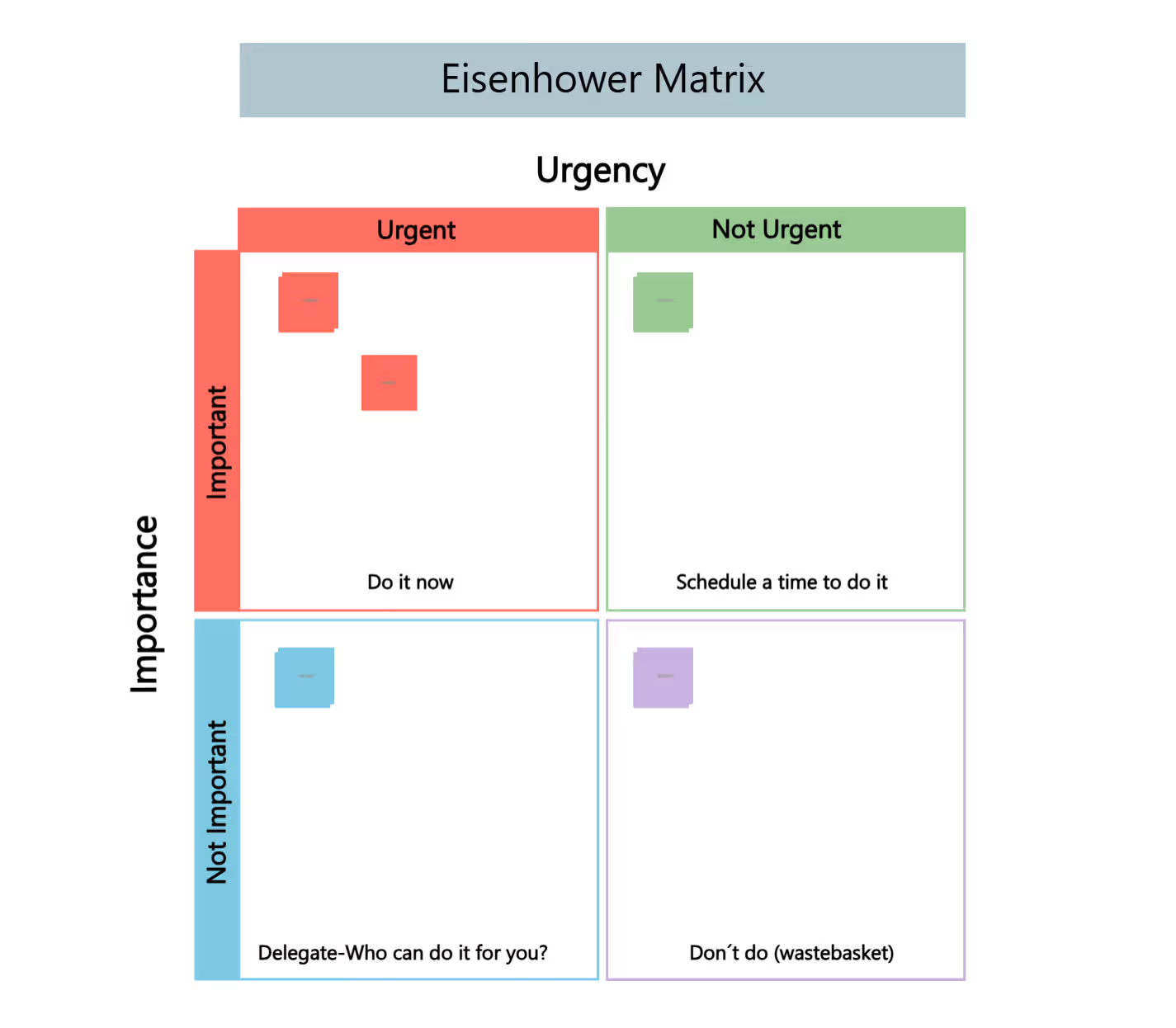
The Collaboard template has four colored quadrants, each with a deck of matching sticky notes: red for do it now, green for schedule, blue for delegate and purple for the wastebasket. Everyone can add and move tasks at the same time, which makes it easy to prioritize as a team. These six steps take you from a list of tasks to clear priorities.
Set a goal and time frame
Decide what you are prioritizing for, such as this week's work or a project phase. Importance is always measured against this goal.
Collect tasks
Take notes from the decks and write down one task per note. In a team, everyone adds their own tasks at the same time.
Assess urgency
A task is urgent if a real deadline is close or if waiting has a clear cost. A loud request alone doesn't make a task urgent.
Assess importance
A task is important if it moves you toward the goal from step 1. Ask yourself: what happens if this never gets done?
Sort and decide
Place each task in its quadrant and agree on the action: do it now, schedule it, delegate it or drop it. Discuss tasks that people place differently.
Assign and review
Add an owner and a date to every task you keep. Review the board weekly, because tasks move between quadrants over time.
What is the Eisenhower matrix?
The Eisenhower matrix sorts tasks into four quadrants using two questions: Is it urgent? Is it important? It is named after US President Dwight D. Eisenhower, to whom the principle is attributed. It helps you separate what truly matters from what only feels pressing.
The four quadrants with an example
The examples follow one illustrative scenario: a project manager planning the week. What counts as important always depends on your own responsibilities and goals.
- Urgent and important: do it now. A real deadline and significant consequences. Example: resolve an issue that blocks today's customer delivery.
- Important, not urgent: schedule it. It contributes to your goals, but there is time to plan. Example: prepare the risk review for next month's launch.
- Urgent, not important: delegate it. Time sensitive, but someone else can handle it well. Example: arrange the logistics for tomorrow's workshop.
- Neither urgent nor important: drop it. No meaningful contribution to your goals. Example: polish an internal slide nobody will use.
If you want to rank tasks by criteria other than urgency and importance, the priority matrix or the effort-impact matrix may fit better.
Typical situations for the Eisenhower matrix
- Weekly planning Sort the week's tasks on Monday and protect time for what matters.
- Team priorities Make competing requests visible and agree on what the team does first.
- Workload conversations Use the board in a one-on-one to decide what to delegate or drop when someone has too much on their plate.
- Before a deadline Sort open tasks ahead of a launch or a project milestone.
Handling urgent tasks and the second quadrant
- When everything seems urgent Ask what actually happens if a task waits a week. Often the deadline is a wish, not a requirement.
- Agree on what important means In a team, write the shared goal next to the board first. Important then means: does this task move us toward it?
- When you can't delegate Make the task smaller instead: do a simpler version, batch similar tasks or negotiate the deadline.
- Protect the second quadrant Important tasks that aren't urgent get pushed aside most often. Block time for them in your calendar right away.
Why Collaboard
A Swiss-made online whiteboard for teams that care where their data lives.
Your data stays in Europe
Choose hosting in Switzerland, Germany or the EU, fully GDPR compliant. Or run Collaboard on your own servers.
Invite anyone with a link
Guests join your board for free, right in the browser. Nothing to install, no extra licenses for participants.
Made in Switzerland, with real support
Collaboard is developed in Switzerland. When you need help, you talk to people who know the product.
Frequently asked questions
Is the Eisenhower matrix template free?
Yes, the Eisenhower matrix template is free to use with a Collaboard account. The free plan includes up to 3 boards and five people per session.
How do I tell urgent from important tasks in the Eisenhower matrix?
In the Eisenhower matrix, urgent means a task has a real deadline soon or waiting has a clear cost. Important means it contributes to your goals. A task can be urgent without being important, and the other way round.
What if every task seems urgent and important?
If every task lands in the first quadrant of the Eisenhower matrix, the criteria are too loose. Check each deadline, ask what really happens if the task waits a week, and rank the remaining tasks within the quadrant.
Can a team work on the Eisenhower matrix together?
Yes, a team can work on the Eisenhower matrix template in Collaboard at the same time. Everyone adds and moves sticky notes in real time, so different views on priorities become visible and can be discussed.
How is the Eisenhower matrix different from a priority matrix?
The Eisenhower matrix always uses urgency and importance, while other priority matrices can use different criteria.
Start your next whiteboard now
Get a free trial of Collaboard with up to 3 boards and five people per session. All key features are available for you to try out.