Create a Roadmap: A Guide to Successful Planning
Our world is shaped by constantly evolving projects and complex tasks, making the need for clear and structured planning increasingly important. This is where roadmaps come in: an essential tool for every project team to define goals, track progress and overcome challenges.
In this guide, you will get step-by-step instructions for creating an effective roadmap. We will also show you why roadmaps are so important, what makes a successful roadmap and how you can use Collaboard to plan and track your projects online.
.png)
Step-by-Step Guide to Creating a Roadmap
A roadmap is a powerful tool for planning and visualizing projects, strategies and initiatives.
We have created a step-by-step guide for you on how to create a meaningful roadmap:
- Clarify your goals and requirements
Clearly define the goals and requirements of your project or strategy. Identify the main objectives, milestones and success criteria you want to achieve. - Collect relevant information
Gather all relevant information, data and resources you need to create your roadmap. This may include project plans, budgets, schedules and other important documents. - Choose the right tool
Decide on a suitable tool or software for creating your roadmap. You can choose from various project management tools or use our GDPR-compliant online whiteboard. - Structure your roadmap
Think about a clear structure for your roadmap. Define the main phases, tasks or milestones that should be shown on the roadmap and arrange them logically. - Visualize your data
Use visual elements such as colors, symbols, icons and diagrams to present your data and information on the roadmap in an engaging way. This makes the content easier to understand and communicate. - Add timelines
Integrate timelines or schedules into your roadmap to illustrate the timeline of projects or strategic initiatives. Mark important dates, milestones or deadlines. - Review and optimize your roadmap
Take the time to carefully review and optimize your roadmap. Make sure all information is correct and that the roadmap clearly communicates the desired goals and messages. - Share and communicate your roadmap
Share your roadmap with relevant stakeholders and team members. Use it as an important communication tool to make the progress, direction and priorities of your project transparent. - Update your roadmap regularly
Keep your roadmap up to date by updating or adjusting it when needed. Track progress, identify obstacles and make the necessary adjustments to ensure your roadmap remains current and relevant.
By following these steps, you can create a meaningful and effective roadmap that helps you achieve your goals and successfully implement your project.
The Definition of a Roadmap: What Is a Roadmap and How Does It Work?
A roadmap is a visual representation of a plan or strategy that helps define goals, track progress and outline the path toward achieving those goals.
It can be used in various areas, such as product development, project management or business strategy. Essentially, a roadmap is a type of timeline that highlights important milestones, tasks and decision points, providing a clear direction.
The Most Important Features of a Roadmap
Now let’s look at the basic building blocks of a roadmap. We will explain the features of a successful roadmap in more detail later.
- Time orientation
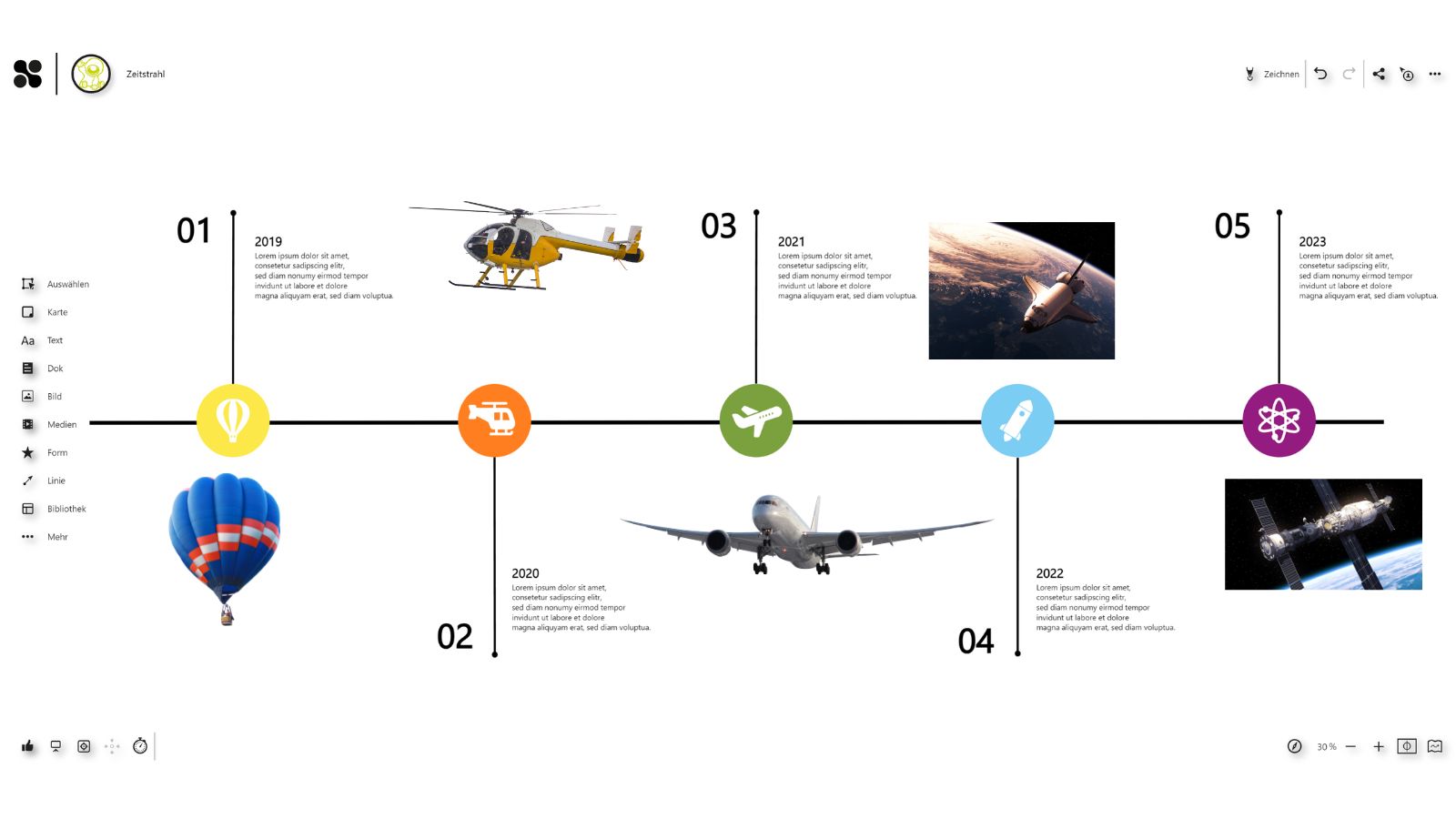
A roadmap shows the timeline of projects or strategic initiatives. It visualizes the starting point, intermediate goals and the end point. - Structured presentation
Roadmaps are structured and clearly organized. They often use colors, icons and symbols to identify different types of tasks or events. - Flexibility
A good roadmap should be flexible and adaptable to change. It makes it possible to take new requirements or risks into account and adjust the plan accordingly. - Communication tool
Roadmaps serve as an important communication tool to inform stakeholders about the progress and direction of a project. They make collaboration easier and create transparency within the team.
How a Roadmap Works
Let’s now take a closer look at how a roadmap works:
- Goal setting
The roadmap starts by defining clear goals or milestones that should be achieved. These goals can be short, medium or long term and should meet the SMART criteria: specific, measurable, achievable, relevant and time-bound. - Planning
Once the goals have been defined, the next step is to plan the actions required to achieve them. This includes identifying tasks, resources and timelines. - Implementation and monitoring
During implementation, the roadmap is regularly monitored and updated. Progress is tracked, obstacles are identified and adjustments are made to ensure the project stays on track. - Communication
The roadmap serves as a central communication tool to keep all stakeholders informed about project progress. It makes it possible to communicate relevant information transparently and clearly, thereby promoting collaboration within the team.
A roadmap is a powerful tool for planning, organizing and managing complex projects. It provides clear structure and direction, supports collaboration and makes communication between project participants easier.
Features of a Successful Roadmap: What Makes a Good Roadmap
A successful roadmap is characterized by specific features that make it an effective planning tool and support the achievement of goals.
Here are some important features that define a good roadmap:
- Clearly defined goals and milestones
A good roadmap contains clear and measurable goals as well as important milestones that need to be reached on the way to the final objective. These goals and milestones should meet the SMART criteria: specific, measurable, achievable, relevant and time-bound. - Structured presentation
A successful roadmap is clearly organized and well structured. It uses clear visual elements such as colors, icons and symbols to identify different types of tasks, events or project phases. This makes the roadmap easy to understand and navigate. - Flexibility and adaptability
A good roadmap is flexible and can adapt to changes or new requirements. It allows the plan to be updated or adjusted when needed without losing sight of the overall direction. - Time orientation
A successful roadmap shows the timeline of projects or strategic initiatives. It visualizes the starting point, intermediate goals and the end point to provide clear time orientation. - Clear communication
A good roadmap serves as an important communication tool to inform stakeholders about the progress and direction of a project. It makes collaboration easier and creates transparency within the team. - Involvement of relevant stakeholders
A successful roadmap takes the needs and requirements of all relevant stakeholders into account. It makes it possible to integrate the perspectives and interests of different participants, thereby increasing acceptance and support for the plan. - Continuous monitoring and adjustment
A good roadmap is regularly monitored and updated. Progress is tracked, obstacles are identified and adjustments are made to ensure the project stays on track and the defined goals are achieved.
Overall, a successful roadmap is defined by its clear structure, flexibility, communication effectiveness and continuous adaptability. It provides guidance for complex projects and supports goal achievement through systematic and transparent planning.
Requirements for Creating a Roadmap: What Do You Need?
Before you start creating a roadmap, it is important to make sure you have the necessary requirements in place.
Important things you may need include:
- Clearly defined goals and requirements
Before creating a roadmap, it is important to define clear goals and requirements for your project, strategy or initiative. These serve as a guide for designing the roadmap and help you stay focused. - Access to relevant information and data
You need access to all relevant information, data and resources required to create your roadmap. This may include project plans, budgets, schedules, performance indicators and other important documents. - Creativity and visualization skills
Creating a meaningful roadmap requires creativity and visualization skills. You should be able to visualize complex information and data in a clear and engaging way. - Time and commitment
Creating a roadmap requires time and commitment. Actively engage with the topic, gather relevant information, design and carefully revise your roadmap to ensure it clearly communicates your goals and messages. - A suitable tool or software
Choose a suitable tool or software for creating your roadmap.
By making sure you have these requirements in place, you lay the foundation for successfully creating and implementing your roadmap.
The Power of Visualization: Why a Roadmap Is Essential
Visual representations have a special impact on people and how they understand things. They allow us to quickly grasp complex information and recognize connections at a glance.
When information is presented in a graphical form, it makes communication easier and improves understanding between team members. Visualizations make abstract concepts tangible and help create a shared language that everyone can understand.
A roadmap is far more than just a linear representation of milestones and timelines. It is the living centerpiece of every project, visualizing its goals, plans and progress at a glance.
So why is a roadmap essential for the success of your projects? Because it allows you to:
- define the direction,
- identify obstacles early, and
- keep the entire team on track.
By clearly visualizing tasks, responsibilities and timelines, a roadmap creates transparency and alignment within the team. It serves as a guide for everyone involved, provides orientation in complex projects and motivates the team to work together toward a shared goal.
In short: a roadmap is the foundation on which successful projects are built.
The Different Types of Roadmaps: Which One Best Fits Your Project?
When creating a roadmap, there are different types to choose from, each with its own purpose and use case. Here are some common types of roadmaps and their characteristics:
- Time-based roadmaps
This type of roadmap visualizes the timeline of tasks, milestones or project steps. They are well suited for planning and illustrating the schedule and sequence of activities. - Thematic roadmaps
Thematic roadmaps focus on specific topics, goals or areas. They help structure and organize different aspects of a project or strategy by grouping them by topic or category. - Product roadmaps
Product roadmaps focus on the development and launch of new products or features. They show the development path of a product over a specific period of time and help define priorities and the plan for product development. - Technology roadmaps
Technology roadmaps describe the strategic direction and development of technologies within a company. They show the use and integration of technologies over a specific period of time and help plan and make technology-related decisions. - Strategic roadmaps
Strategic roadmaps provide a holistic overview of the strategic goals and initiatives of a company or organization. They show the organization’s direction, priorities and long-term vision, and help make and implement strategic decisions.
Online Roadmaps: The Future of Project Planning
In an increasingly digital world where teams are often spread across different locations and time zones, online project planning is becoming more and more important.
The use of online roadmaps is revolutionizing the way teams collaborate and plan projects.
But what makes online roadmaps so unique, and why are they the future of project planning?
- Real-time collaboration
Online roadmaps allow team members to collaborate from anywhere and in real time. This enables an agile and flexible way of working, where teams can quickly respond to new requirements. - Up-to-date and accessible
Online roadmaps offer the advantage that everyone involved always has access to the latest version. This helps avoid misunderstandings and duplicate work, while ensuring efficient project execution. - Visualization of complex relationships
By using colors, shapes and icons, complex relationships and dependencies can be presented clearly. This not only makes project planning and implementation easier, but also improves communication within the team.
The future of project planning undoubtedly lies in the online use of roadmaps. They not only make it possible to work more efficiently and flexibly, but also promote collaboration and information sharing within the team. Anyone who wants to benefit from a modern and agile way of working should rely on online roadmaps.
Collaboard: Your Tool for Creating Online Roadmaps
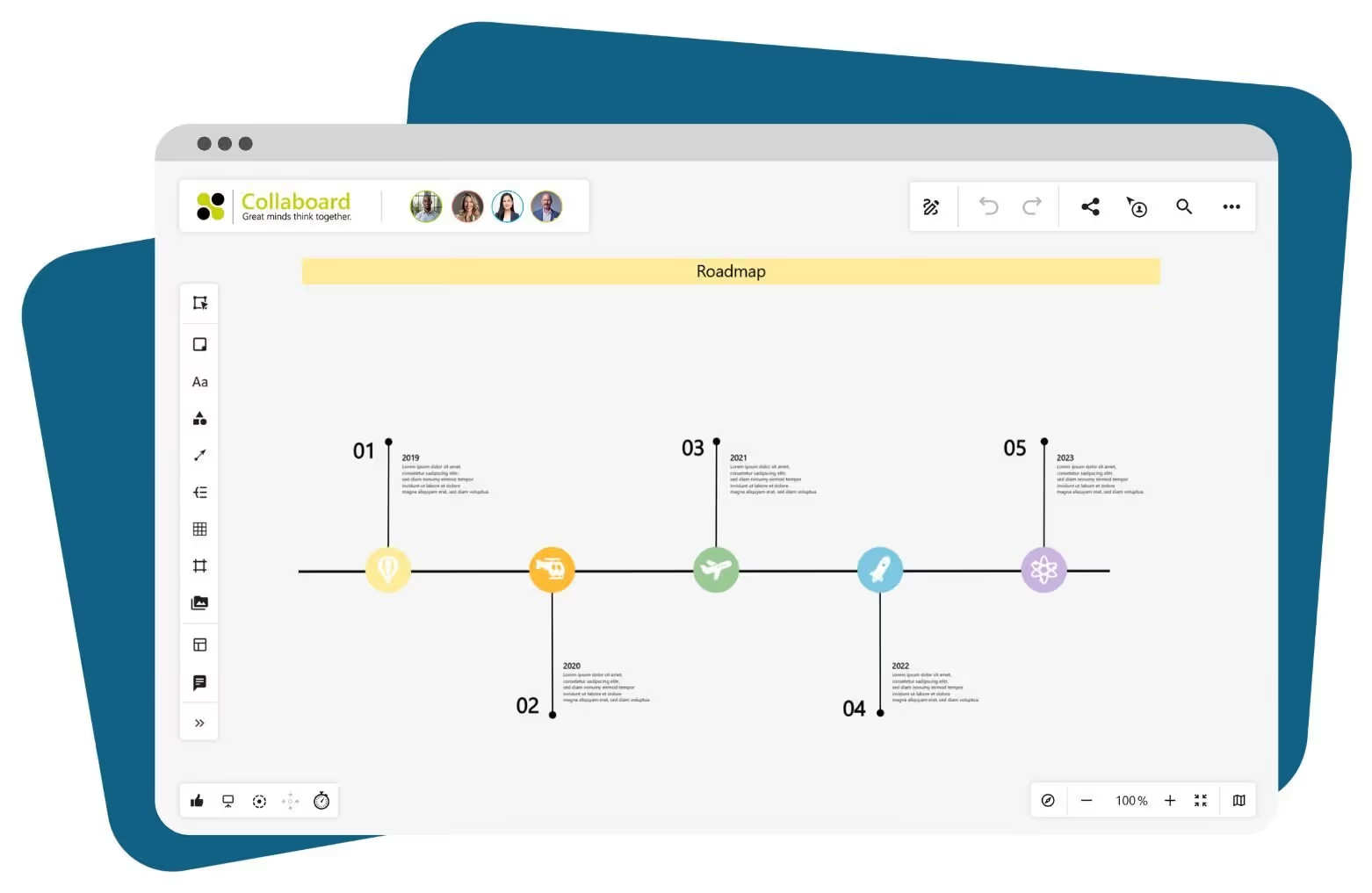
Collaboard is a powerful tool that helps you create and share roadmaps online.
With its user-friendly interface and versatile features, Collaboard is ideal for teams that want to work on roadmaps together and visualize their projects.
Why use Collaboard for your roadmap?
- Collaborative workspace
Collaboard provides a collaborative workspace where team members can work on a roadmap at the same time. This makes collaboration easier and increases efficiency. - Flexibility and customization
With Collaboard, you can design and adapt your roadmap according to your needs. From choosing different templates to customizing layouts and designs, Collaboard offers maximum flexibility. - Real-time updates
Changes to the roadmap are displayed in real time, so all team members are always up to date. This promotes transparency and prevents misunderstandings. - Integrated communication tools
Collaboard includes integrated communication tools such as chat and comments, making collaboration easier and enabling feedback and idea sharing. - Cloud-based platform
As a cloud-based platform, Collaboard allows easy access to your roadmaps from anywhere and on any device. This simplifies collaboration for distributed teams and supports flexible working. - AI-generated roadmaps via MCP
With the Collaboard MCP Server, you can also generate roadmap structures with the help of AI. Instead of starting from a blank board, you can describe your project, goals or strategy in a prompt and let AI create an initial roadmap directly in Collaboard. - GDPR compliance
The different hosting options in Germany, Switzerland, Sweden and the Netherlands cover country-specific requirements for data security. You decide in which cloud your data is stored. - On-premises and private cloud
If you do not want to store your data in the cloud, you can also run Collaboard yourself.
Thanks to its powerful features and user-friendly interface, Collaboard is the ideal solution for creating and sharing online roadmaps.
Conclusion: Use the Benefits of an Online Roadmap for Your Project Planning
In today’s dynamic business world, clear and structured project planning is essential for project success.
An online roadmap offers numerous benefits and possibilities that traditional paper roadmaps cannot provide. By using an online roadmap, teams can collaborate more efficiently because they stay up to date in real time and can see changes immediately. The collaborative workspace allows team members to exchange ideas, give feedback and work together on developing the roadmap.
In addition, an online roadmap offers flexibility and adaptability, making it easy to adjust to the changing requirements and needs of a project. The integration of communication tools makes collaboration easier and promotes information sharing between team members.
Thanks to the cloud-based nature of online roadmaps, teams can access and edit their roadmaps from anywhere, making collaboration easier for distributed teams and increasing flexibility at work.
On This Page
Turn this use case into your own whiteboard
Create a free Collaboard account and start working visually with your team today.
No credit card required
Create a Roadmap: Frequently Asked Questions and Answers
Do you have any questions? We're here to help.
A roadmap is a visual representation that shows the strategic goals and milestones of a project over a specific period of time.
An effective roadmap should have clear goals and milestones, realistic timelines, clear communication of expectations and regular reviews and updates to ensure it meets changing requirements.
A roadmap can be shared via various channels, including email, project management tools, shared file-sharing platforms or even printed copies during meetings.
A roadmap should include goals, milestones, timelines, resources and dependencies to provide a comprehensive overview of the project.
A roadmap should be updated regularly to account for changes in the project, new requirements or unforeseen events. The frequency of updates depends on the dynamics of the project.
A roadmap can be created using tools such as Collaboard, PowerPoint, Excel or specialized project management software.
An online roadmap offers real-time collaboration, instant updates, flexible customization options and the ability to access it from anywhere, which improves collaboration and efficiency.
A roadmap helps to keep track of a project, communicate goals and milestones and coordinate the work of the team.
Start your next whiteboard now
Get a free trial of Collaboard with up to 3 boards and five people per session. All key features are available for you to try out.