Create a Project Plan: Best Practices with Collaboard
A well-created project plan is the key to the success of any project. It is no secret that companies using structured project management methods complete their projects more successfully.
Projects often fail because of unclear goals, poor planning or weak communication. As a result, many projects do not meet their original expectations. This is where the project plan comes in. We show you what you need to consider, which steps are involved in project planning and which tools you need.
Why Work with a Project Plan?
A project plan is not only a guide for the project process, but also a tool that helps teams organize their tasks efficiently, define milestones and keep everyone involved on the same page.
Without a clear project overview and structured planning, projects run the risk of being delayed or exceeding the budget. Both are problems that occur in almost half of failed projects. Companies that use project management tools such as Collaboard benefit from improved communication structures and real-time updates, which can help avoid planning errors.
Benefits of a Project Plan for Your Company
A project plan creates clear structures and transparency, leading to better coordination and collaboration. By planning goals, timelines and resources, you can avoid bottlenecks and ensure that the project stays on schedule and within budget. Especially in teamwork, a project plan becomes essential for maintaining an overview and keeping everyone involved aligned.
Structure of Project Planning: 5 Steps
A good project plan consists of several core elements that ensure the project follows a structured path. The structure of the plan defines which tasks need to be completed at what time, which resources are required and which goals should be achieved. Here are the most important components of a successful project plan:
1.Goal Definition
Every project starts with clear and measurable goals. These goals serve as a guide for all further steps. They should be specific and include both short-term and long-term outcomes. Only by defining these goals can all team members work toward the same final result.
2.Timeline and Milestones
A detailed timeline is important for monitoring project progress. Milestones help define larger project phases and enable regular progress checks. They provide orientation and show whether the project is on schedule.
3.Resource Planning
This is about allocating resources such as personnel, budget and materials. It is important to define early on which resources are needed and how they can be used effectively to avoid bottlenecks.
4.Risk Analysis
An often overlooked but essential component is risk analysis. It identifies potential problems that could affect the course of the project and provides strategies to minimize these risks.
5.Communication and Responsibilities
Clearly defining responsibilities within the team ensures that everyone involved knows which tasks they need to complete. In addition, a communication plan should be established to define how and when updates and information are exchanged between stakeholders.
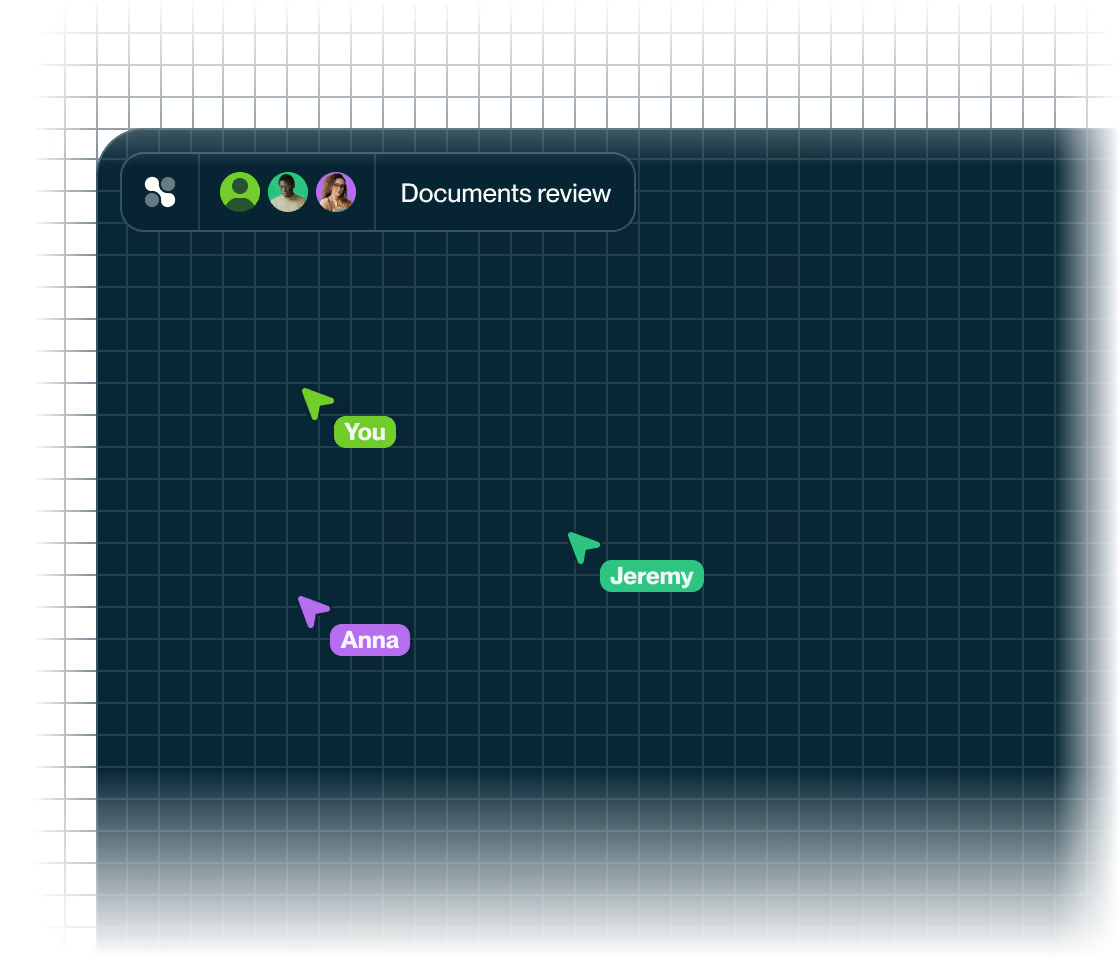
With Collaboard, you can visualize these elements on an infinite whiteboard. The option to use Kanban boards makes it easier to manage tasks and track their progress. In addition, templates such as Gantt charts and mind maps help you structure the entire project plan clearly. This gives you an overview of all resources, milestones and responsibilities and allows you to make changes in real time that are immediately visible to everyone involved.
Create a Project Plan: Best Done with an Online Whiteboard
Creating a project plan may sound like a lot of work. However, if you break it down into clear steps, the process becomes much more manageable. With a tool like Collaboard, you can not only visualize the planning process, but also collaborate with your team in real time.
Break the project down into individual tasks. Which work steps need to be completed to achieve the goals? Collaboard offers helpful templates such as Kanban boards, which make it possible to visually organize and prioritize tasks. Simply drag task cards onto the board and arrange them by priority.
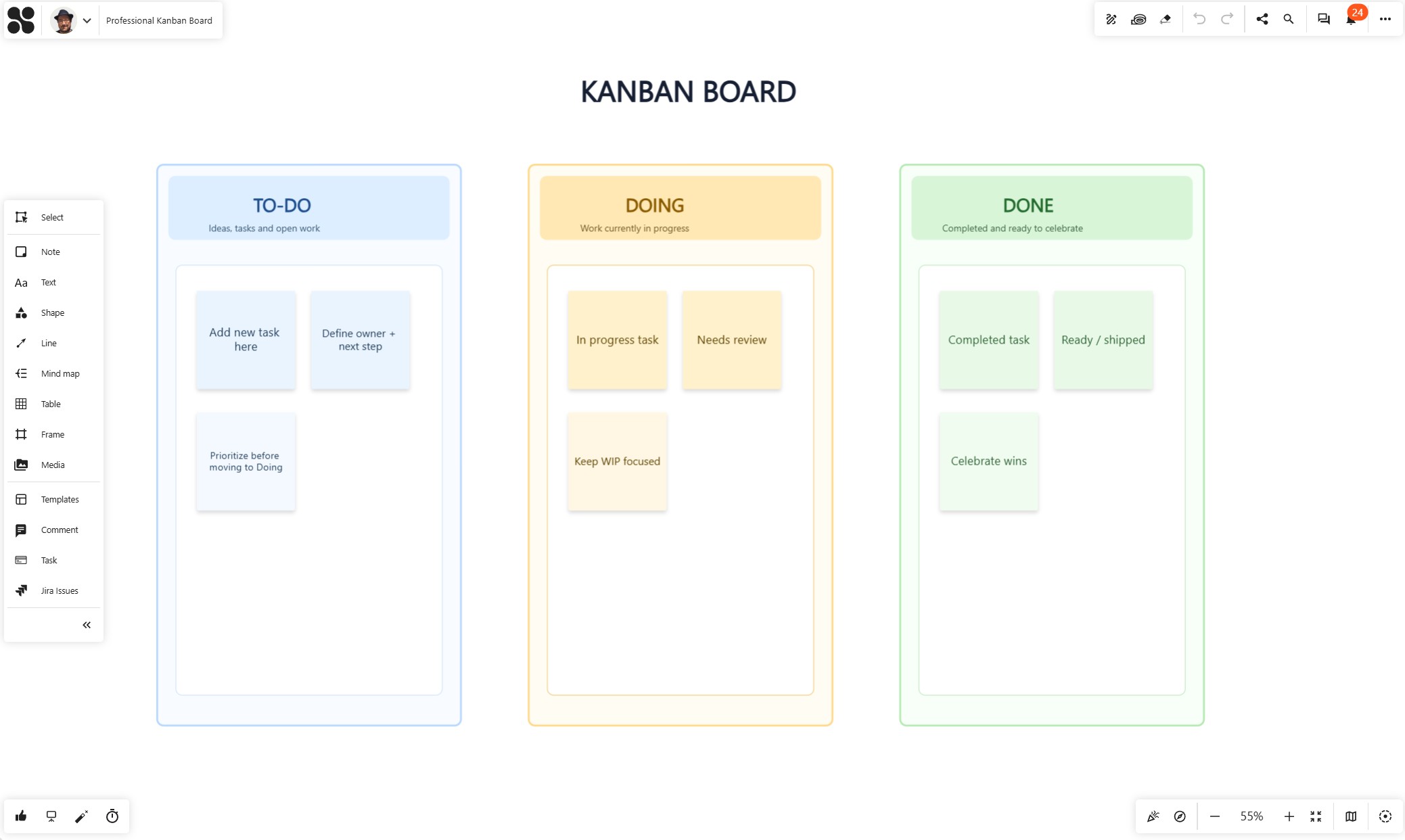
Every task needs a responsible person. In the next step, assign team members to the respective tasks. In Collaboard, you can note names and responsibilities directly next to the tasks and adjust them when needed.
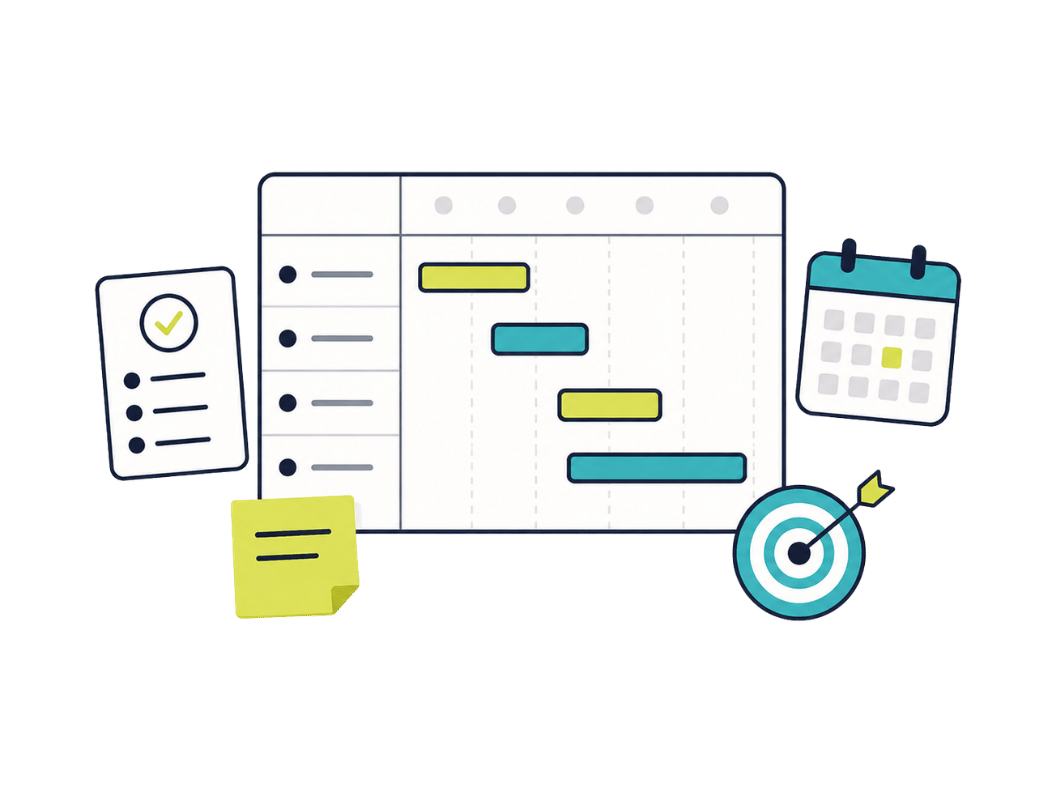
Define when each task must be completed and when specific milestones should be reached. A Gantt chart in Collaboard can help you clearly visualize the project timeline and define deadlines.
Next, make sure that all necessary resources, such as materials, personnel and budget, are available. With Collaboard, you can upload files, documents and calculations directly to the online whiteboard and make them accessible to everyone involved. This allows you to bundle all resources in one central place.
Finally, you should assess potential risks and develop strategies to minimize them. Note possible problem areas on the whiteboard and develop alternatives together with your team. Collaboard gives you the flexibility to adjust the plan at any time and make changes visible to everyone in real time.
Why Collaboard Is the Best Choice for Your Project Plan
Choosing the right tool for creating and managing a project plan can make the difference between a well-organized project and a chaotic one. With Collaboard, you get more than just an online whiteboard. You get a versatile tool that is perfectly suited to project planning and project management. Here are some reasons why Collaboard is the best choice for you:
Infinite Workspace for a Flexible Project Overview
Collaboard provides an unlimited canvas where you can clearly display all elements of your project plan. Whether you are coordinating several departments or managing complex projects with many tasks, you always have enough space to structure everything visually. This flexibility allows you not only to track project progress, but also to spontaneously add ideas or new tasks.
Large Selection of Templates
Collaboard combines the strengths of proven project management methods such as Kanban boards, effort matrices and monthly planners. This allows you to visually organize, move, plan and prioritize tasks. In addition, you can use proven layouts such as SWOT analyses, project timelines or to-do lists with just a few clicks.
Real-Time Collaboration and Seamless Communication
One of the biggest advantages of Collaboard is the ability to collaborate in real time. Your entire team can work on the whiteboard at the same time, update tasks and add comments. This transparency not only supports fast decision-making, but also prevents delays that can arise from long communication channels.
Integration and Adaptability
Insert documents, spreadsheets or diagrams from third-party providers: Collaboard supports a wide range of file formats. This allows you to bring all relevant information together in one place and make it accessible to your team. Collaboard can also be easily integrated into existing processes and systems, giving you maximum flexibility.
Security and Data Protection
In addition to functionality, security is a key aspect of project work. With hosting options in Europe and strict data protection guidelines, Collaboard provides the security your company needs to protect sensitive project data. This makes it especially attractive for companies that need to comply with strict compliance requirements.
Final Tips for the Perfect Project Plan
- Define specific and measurable project goals. This helps your team stay focused and set the right priorities.
- Continuously monitor project progress and update the plan when needed. With Collaboard, you can make changes visible to everyone in real time.
- Make sure that everyone involved is always informed about the project status. Use Collaboard’s real-time collaboration features to avoid misunderstandings.
- Plan the allocation of personnel and budget carefully. Collaboard allows you to clearly visualize and manage resources.
- Create a risk analysis and record possible problems on the whiteboard to proactively develop solutions.
Project Planning as the Foundation for Your Team’s Success
A project plan is far more than just a list of tasks. It is the backbone of every project. With clear goals, a well-thought-out distribution of tasks and realistic scheduling, you lay the foundation for a smooth process.
With a tool like Collaboard, project planning becomes not only clearer, but also more interactive and flexible. Collaboard gives you all the tools you need to plan your project in a structured and efficient way. By using project planning best practices and relying on a powerful tool, you maximize your project’s chances of success and give your team the overview it needs to achieve every goal.
On This Page
Turn this use case into your own whiteboard
Create a free Collaboard account and start working visually with your team today.
No credit card required
Project Plan: Frequently Asked Questions and Answers
Do you have any questions? We're here to help.
A project plan is a detailed document that defines all tasks, milestones, resources and deadlines of a project to ensure it is completed on time and within budget.
Collaboard offers an unlimited workspace, templates such as Kanban boards and to-do lists, as well as real-time collaboration to make project progress transparent and visible to all stakeholders.
You create a project plan by defining the project goals, distributing tasks and responsibilities, creating a timeline and planning all necessary resources. Tools like Collaboard make this process easier through templates and real-time collaboration.
Common mistakes include unclear objectives, missing resource planning, unrealistic timelines and insufficient communication within the team.
The most important elements of a project plan include goal definition, task list, schedule, resource planning, milestones and risk analysis.
A project plan provides clarity and structure, reduces risks and promotes smooth collaboration, as all stakeholders are always kept up to date.
Start your next whiteboard now
Get a free trial of Collaboard with up to 3 boards and five people per session. All key features are available for you to try out.