Jobs to be Done Template
Understand why customers really buy a product. The Jobs to be Done framework looks at the progress people want to make rather than at the product itself, and reveals new opportunities for innovation.
Free to start · Swiss-made · GDPR compliant
Mapping customer jobs with Jobs to be Done
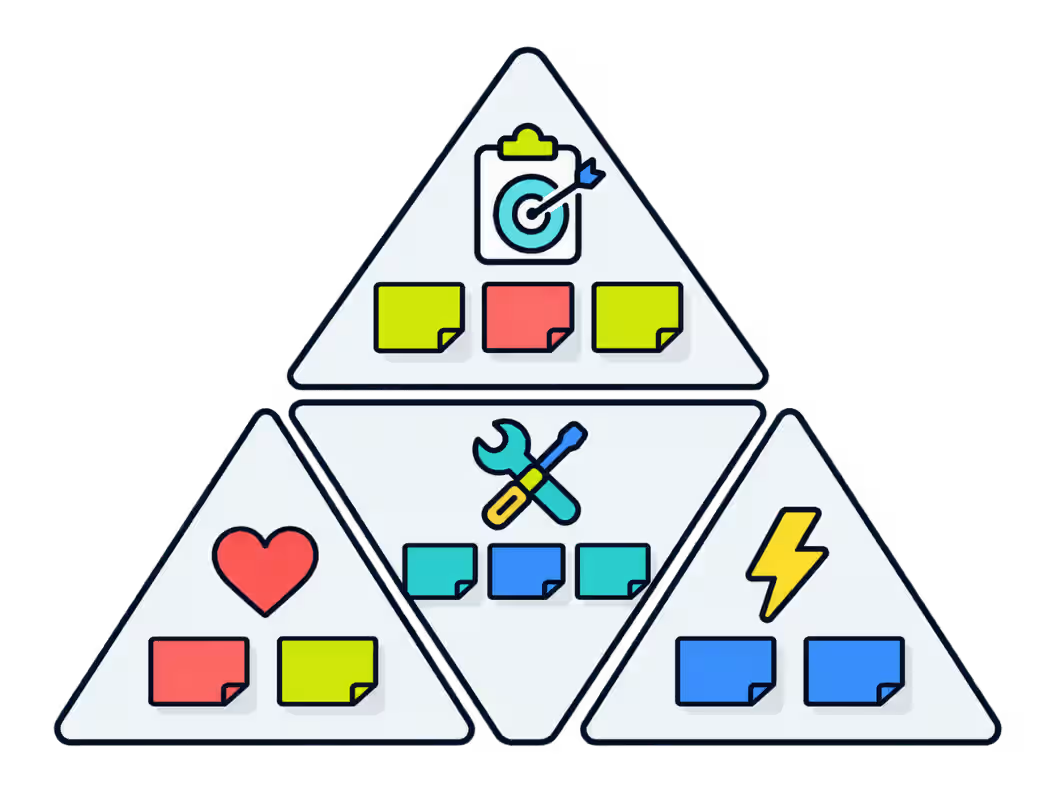
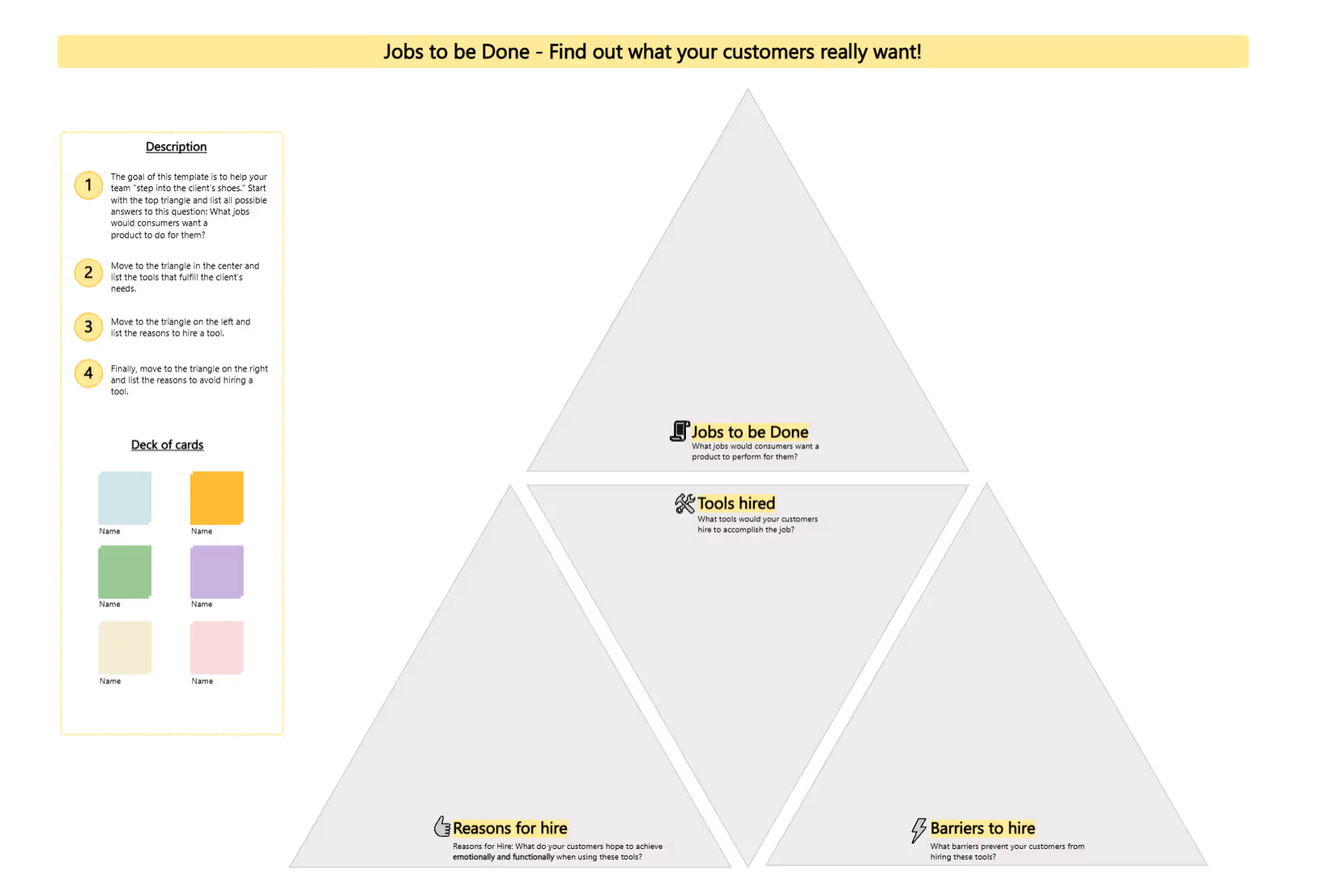
The Collaboard template arranges four triangles into one large triangle: Jobs to be Done at the top, Tools hired in the center, Reasons for hire on the left and Barriers to hire on the right. Each triangle has a guiding question, and a description on the left explains the order. The deck has six colors, one per participant, so you can see who added which note.
Step into the customer's shoes
Agree on the customer group you're looking at, and bring along what you know from interviews or support requests.
Collect the jobs
Start with the top triangle: what jobs do customers want a product to do for them? Describe the progress, not the product.
List the tools hired
In the center triangle, note everything customers use today to get the job done, including workarounds and competitors from other categories.
Find the reasons for hire
In the left triangle, note what customers hope to achieve, functionally and emotionally.
Name the barriers
In the right triangle, collect what keeps customers from hiring these tools.
Look for opportunities
Compare reasons and barriers. Where the reasons are strong and the barriers high, there's room for a better solution.
What is Jobs to be Done?
Jobs to be Done looks at customers through one question: what are they trying to get done? The idea is that people hire products and services to make progress in a specific situation, and replace them when something better comes along. The focus is on the job, not on the product, which often reveals competitors and opportunities a team didn't see before.
The four triangles of the template
The examples follow one illustrative scenario: adults who want to learn a new language.
- Jobs to be Done What jobs do customers want a product to perform for them? Example: be able to hold a simple conversation on the next holiday.
- Tools hired What tools do customers hire to get the job done? Example: a language app, an evening class or a private tutor.
- Reasons for hire What do they hope to achieve, emotionally and functionally? Example: feel confident when ordering in a restaurant, and learn during the commute.
- Barriers to hire What stops them from hiring these tools? Example: little time, expensive lessons and fear of speaking.
To match your offer with customer jobs, pains and gains in more detail, continue with the Value Proposition Canvas.
Where Jobs to be Done thinking helps
- Product discovery Understand what customers really want before building features.
- Competitor analysis Find competitors outside your own category, including workarounds.
- Marketing and positioning Describe your offer in terms of the progress customers want to make.
- Interview analysis Structure what you learned in customer interviews.
Thinking in progress, not products
- Describe progress, not products Learning a language is a job. Using a language app is a tool.
- Include emotional jobs Customers often want to feel confident or look competent, not just get something done.
- Look beyond your category A tutor, a video channel or doing nothing at all can compete with your product.
- Use one color per person The six colors in the deck make it easy to see who contributed which view.
Why Collaboard
A Swiss-made online whiteboard for teams that care where their data lives.
Your data stays in Europe
Choose hosting in Switzerland, Germany or the EU, fully GDPR compliant. Or run Collaboard on your own servers.
Invite anyone with a link
Guests join your board for free, right in the browser. Nothing to install, no extra licenses for participants.
Made in Switzerland, with real support
Collaboard is developed in Switzerland. When you need help, you talk to people who know the product.
Frequently asked questions
Is the Jobs to be Done template free?
Yes, the Jobs to be Done template is free to use with a Collaboard account. The free plan includes up to 3 boards and five people per session.
What does Jobs to be Done mean?
Jobs to be Done is the idea that customers hire products to make progress in a specific situation. The focus is on the job, not on the product.
Who developed the Jobs to be Done framework?
The Jobs to be Done framework was popularized by Clayton Christensen, building on earlier work by Tony Ulwick and others.
What is a job statement in Jobs to be Done?
A job statement is a short description of what a customer wants to achieve in a certain situation, often in the form: When I ..., I want to ..., so that ....
How is Jobs to be Done different from a persona?
A persona describes who the customer is, while Jobs to be Done describes what the customer wants to achieve. The two complement each other well.
Start your next whiteboard now
Get a free trial of Collaboard with up to 3 boards and five people per session. All key features are available for you to try out.