WOOP Method Template
Turn wishes into action with four steps: Wish, Outcome, Obstacle, Plan. The WOOP method combines positive thinking with a realistic look at what stands in your way.
Free to start · Swiss-made · GDPR compliant
From wish to if-then plan with WOOP
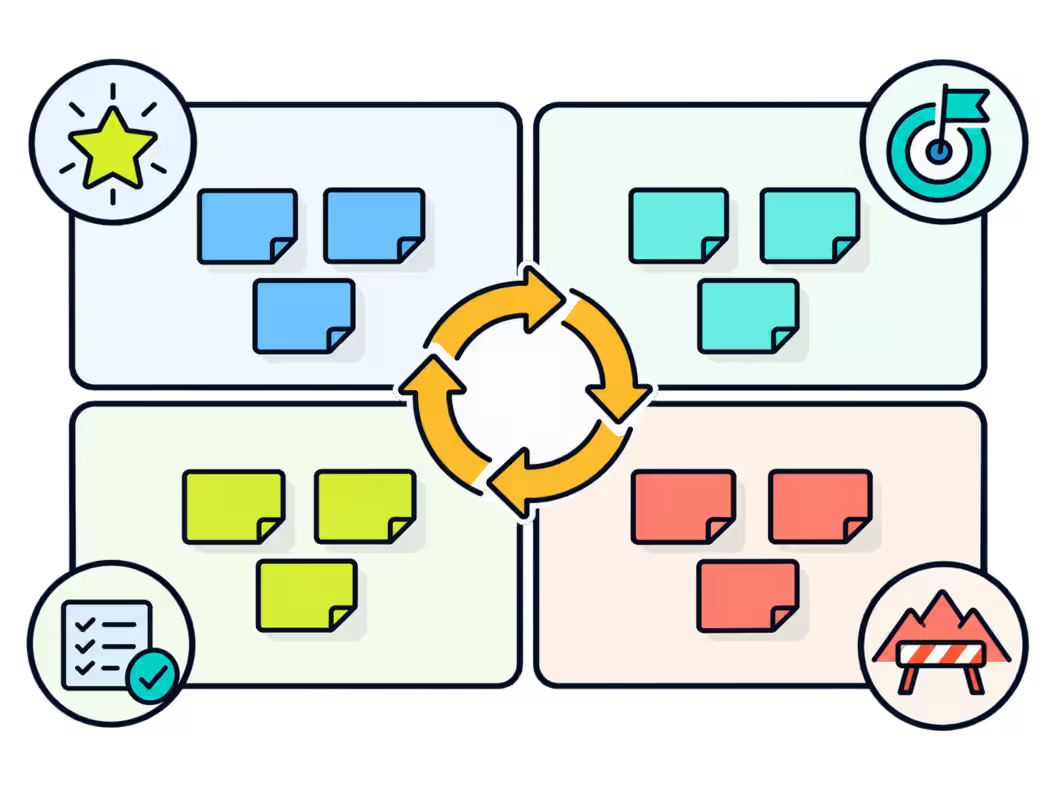
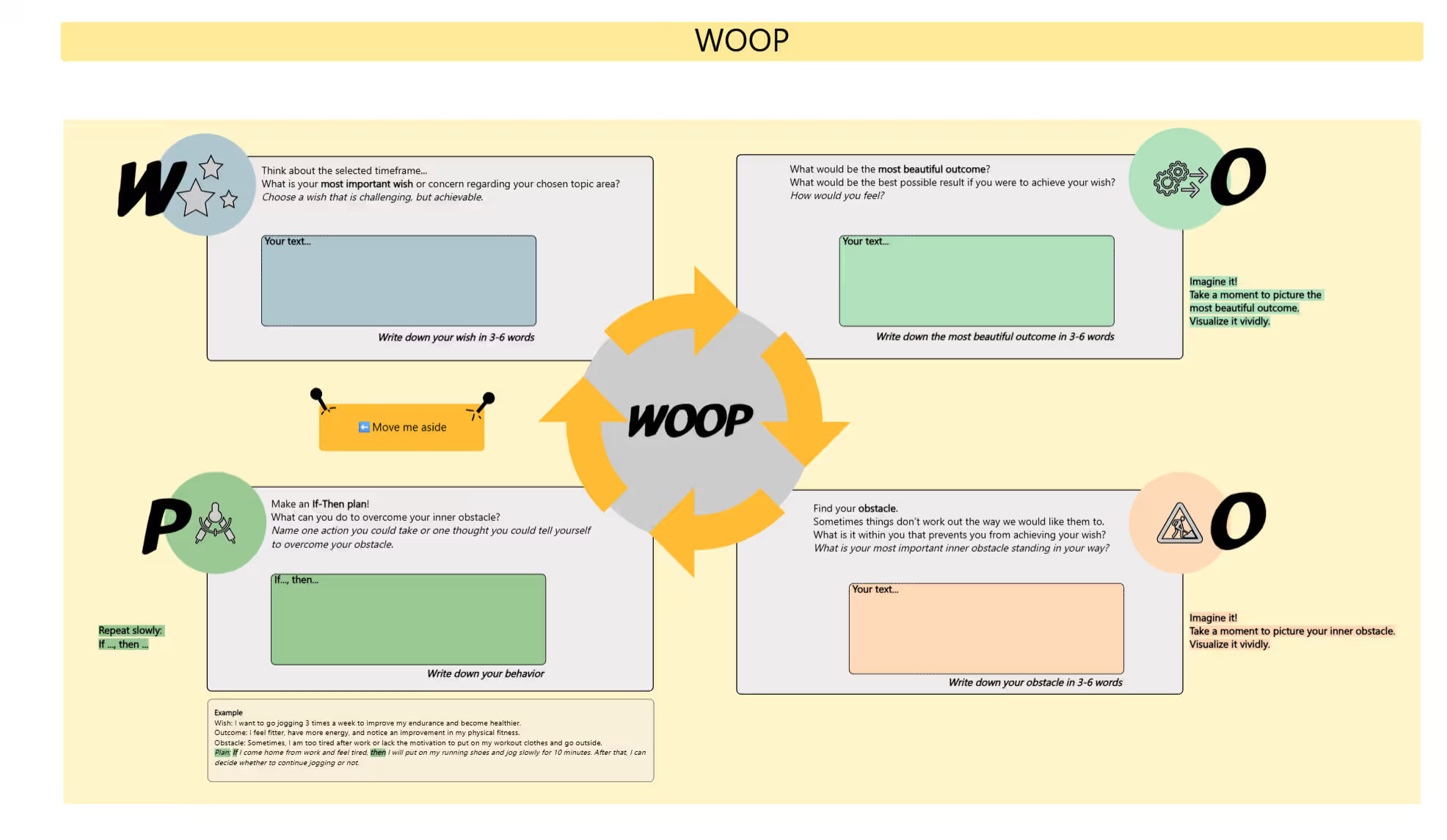
The Collaboard template takes about five to ten minutes and works in three parts. First you pick a topic area, such as health, career, finances or a new language, and a timeframe from 24 hours to one month. Then the WOOP cycle leads clockwise through wish, outcome, obstacle and plan, with a colored field for each step, guiding questions and a worked example.
Choose a topic
Pick a topic area from the board, such as habits, career or a new language, or add your own.
Set a timeframe
Decide in what timeframe you want to achieve your wish: 24 hours, one month, no specific timeframe or a custom one.
Name your wish
Write down your most important wish in three to six words. It should be challenging but achievable.
Imagine the outcome
Picture the best possible result as vividly as you can, and write it down in three to six words.
Find the inner obstacle
Ask what inside you could stand in the way, and picture it just as vividly.
Make an if-then plan
Write one action for the moment the obstacle appears: If ..., then .... Repeat the plan slowly to yourself.
What is the WOOP method?
WOOP stands for Wish, Outcome, Obstacle and Plan. The method was developed by psychologist Gabriele Oettingen, based on her research on mental contrasting: you picture the desired outcome and the inner obstacle that could stop you, then make an if-then plan for exactly that moment.
The four steps of the template
The examples follow one illustrative scenario: someone who wants to read more books.
- Wish A wish that is challenging but achievable, in three to six words. Example: read one book per month.
- Outcome The best possible result, imagined vividly. Example: feeling calmer in the evening and having new ideas.
- Obstacle The most important inner obstacle. Example: scrolling on the phone before going to sleep.
- Plan An if-then plan to overcome it. Example: if I pick up my phone in bed, then I put it away and read five pages.
If you're not sure yet which goal to focus on, start with the Focus Finder.
Goals and habits WOOP is suited for
- Personal goals Turn a wish into a concrete plan in a few minutes.
- Coaching sessions Guide a coachee from a vague wish to a clear next step.
- New habits Plan how to deal with the moment you'd normally give up.
- Team goals Let each team member plan their own contribution to a shared goal.
What makes a WOOP plan work
- Keep it short Three to six words per step are enough. The method works through clarity, not long texts.
- Look inward for the obstacle Name what in you gets in the way, not external circumstances like time or other people.
- Really imagine it Take a moment for the outcome and the obstacle. The effect comes from picturing both vividly.
- One plan is enough A single clear if-then plan works better than a list of good intentions.
Why Collaboard
A Swiss-made online whiteboard for teams that care where their data lives.
Your data stays in Europe
Choose hosting in Switzerland, Germany or the EU, fully GDPR compliant. Or run Collaboard on your own servers.
Invite anyone with a link
Guests join your board for free, right in the browser. Nothing to install, no extra licenses for participants.
Made in Switzerland, with real support
Collaboard is developed in Switzerland. When you need help, you talk to people who know the product.
Frequently asked questions
Is the WOOP method template free?
Yes, the WOOP method template is free to use with a Collaboard account. The free plan includes up to 3 boards and five people per session.
What does WOOP stand for?
WOOP stands for Wish, Outcome, Obstacle and Plan.
Who developed the WOOP method?
The WOOP method was developed by the psychologist Gabriele Oettingen, based on her research on mental contrasting.
Why does the WOOP method focus on obstacles?
The WOOP method focuses on obstacles because naming them in advance and planning for them makes it more likely that you'll reach your goal.
Can I use the WOOP method in a team?
Yes, teams can use the WOOP method to anticipate obstacles in a project and agree on plans.
Start your next whiteboard now
Get a free trial of Collaboard with up to 3 boards and five people per session. All key features are available for you to try out.