PESTEL Analysis Template
Analyze the external factors that affect your organization: political, economic, social, technological, environmental and legal. The PESTEL analysis gives you a complete picture of your environment.
Free to start · Swiss-made · GDPR compliant

Analyzing the macro environment with PESTEL
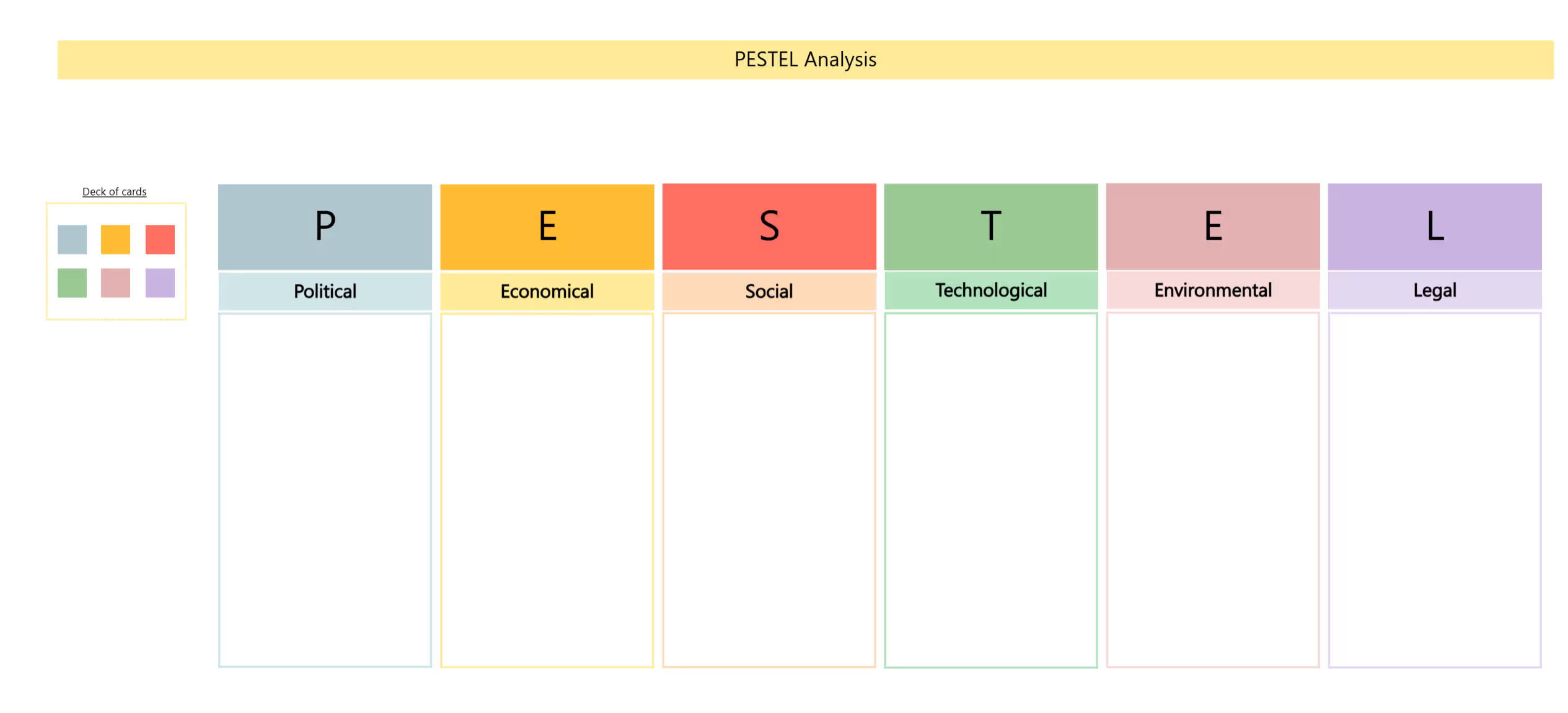
The Collaboard template has six columns, one per letter, each with its own color and a matching deck of notes: blue-grey for political, orange for economic, red for social, green for technological, pink for environmental and purple for legal. The columns make it easy to compare how much is going on in each area.
Set the scope
Agree on the decision, region and time frame, for example a new location over the next five years.
Split the work
Assign one or two columns to each person or small group, so all six areas get the same attention.
Collect factors
Add factors on notes in the color of each column, one factor per note.
Review together
Go through the columns together and remove duplicates or factors without real impact on the decision.
Rate and prioritize
Mark the factors with the highest impact and likelihood, and discuss them first.
Turn into actions
Decide how to respond and carry the key factors into the opportunities and threats of a SWOT analysis.
What is a PESTEL analysis?
A PESTEL analysis examines the external environment in six areas: political, economic, social, technological, environmental and legal factors. Compared to the shorter PEST analysis, it gives environmental and legal developments their own space, which matters in regulated industries and for decisions with a long time horizon.
The six areas of the template
The examples follow one illustrative scenario: a manufacturer planning a new production site abroad.
- Political Political stability, trade policy and subsidies. Example: incentives for new industrial sites.
- Economic Wages, exchange rates and economic growth. Example: rising labor costs in the region.
- Social Workforce, demographics and attitudes. Example: a shortage of skilled technicians.
- Technological Infrastructure and technical developments. Example: the availability of fast internet connections.
- Environmental Climate, resources and environmental expectations. Example: stricter emission targets for industry.
- Legal Laws and regulations. Example: local labor law and data protection rules.
If a quick overview is enough, the PEST analysis covers the first four areas.
Where a PESTEL analysis pays off
- Location and market decisions Compare countries or regions before investing.
- Regulated industries Keep legal and environmental developments in view.
- Long-term strategy Look at trends that will matter in five to ten years.
- Tenders and public sector projects Map political, legal and environmental requirements early.
Avoiding common PESTEL mix-ups
- Don't confuse social and environmental Social covers people and society, environmental covers climate and resources.
- Split the columns Six areas are a lot for one person. Small groups per column work faster and dig deeper.
- Watch for overlaps A new emissions law can be both legal and environmental. Place it once and note the link.
- Update regularly A PESTEL analysis is a snapshot. Review it once a year or when the environment changes.
Why Collaboard
A Swiss-made online whiteboard for teams that care where their data lives.
Your data stays in Europe
Choose hosting in Switzerland, Germany or the EU, fully GDPR compliant. Or run Collaboard on your own servers.
Invite anyone with a link
Guests join your board for free, right in the browser. Nothing to install, no extra licenses for participants.
Made in Switzerland, with real support
Collaboard is developed in Switzerland. When you need help, you talk to people who know the product.
Frequently asked questions
Is the PESTEL analysis template free?
Yes, the PESTEL analysis template is free to use with a Collaboard account. The free plan includes up to 3 boards and five people per session.
What does PESTEL stand for?
PESTEL stands for political, economic, social, technological, environmental and legal factors.
What is the difference between PEST and PESTEL?
PESTEL adds environmental and legal factors to the four PEST dimensions.
How does PESTEL relate to SWOT?
A PESTEL analysis looks at the external environment. Its results often feed into the opportunities and threats of a SWOT analysis.
How often should a PESTEL analysis be updated?
A PESTEL analysis should be updated regularly, for example once a year or whenever the environment changes significantly.
Start your next whiteboard now
Get a free trial of Collaboard with up to 3 boards and five people per session. All key features are available for you to try out.