Effort-Impact Matrix Template
Sort ideas and tasks by how much effort they take and how much impact they have. The Effort-Impact Matrix shows at a glance where the quick wins are and what isn't worth the effort.
Free to start · Swiss-made · GDPR compliant
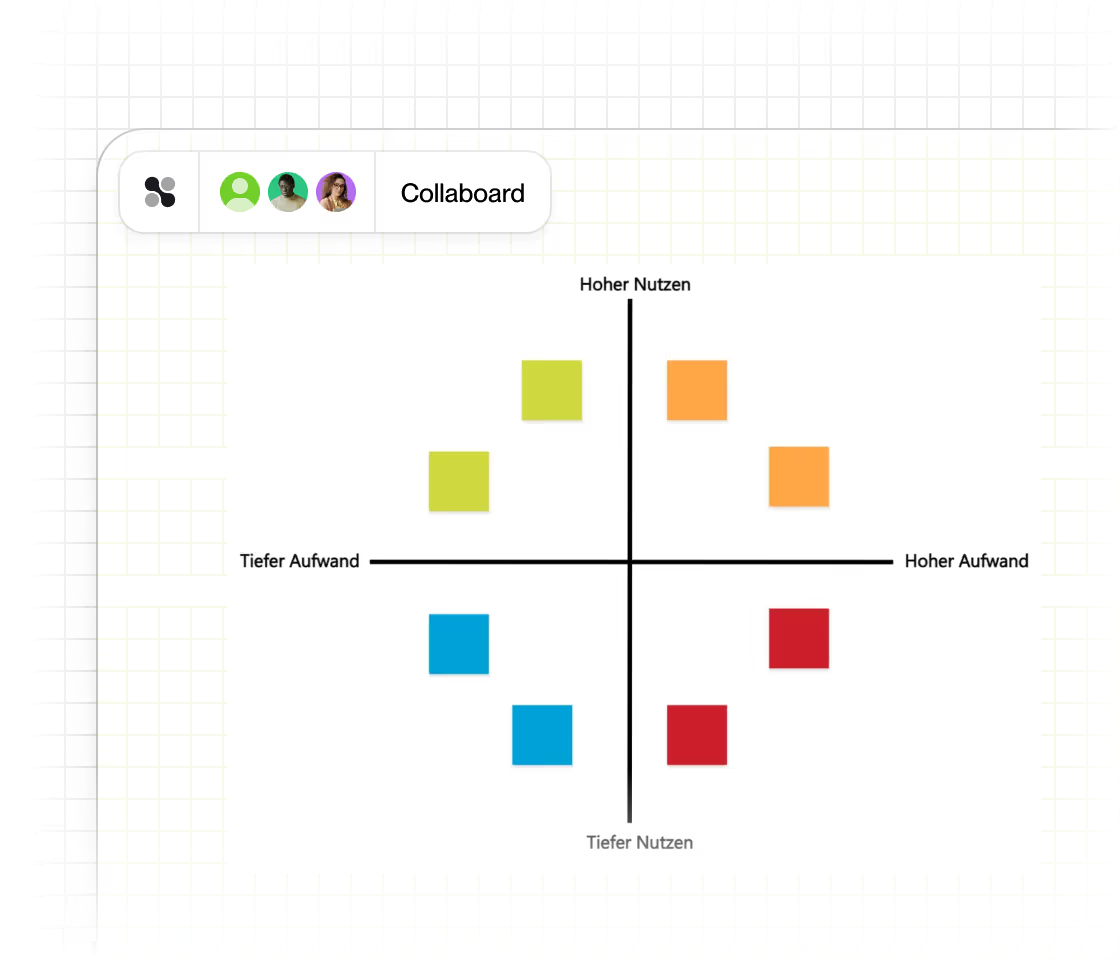
Sorting ideas on an effort-impact matrix
The Collaboard template has four colored quadrants and a matching deck of notes: green for Quick Wins, orange for Major Projects, light blue for Fill Ins and purple for Thankless Tasks. The team places each idea in its quadrant and uses the color of that quadrant, so the result is easy to read at a glance.

Collect ideas
List the ideas or tasks you want to compare, one per note. Results from a brainstorming are a good starting point.
Estimate impact
Agree on what impact means here, for example customer value or time saved, and rate each idea as high or low.
Estimate effort
Estimate the effort in time, people and budget. Involve the people who will do the work, since they estimate effort best.
Place the notes
Move each idea into its quadrant and use the matching color.
Start with Quick Wins
Agree on two or three Quick Wins to start right away, and plan the Major Projects.
Drop or rethink
Decide what to do with Thankless Tasks: drop them, simplify them or find a cheaper way.
What is the Effort-Impact Matrix?
The effort-impact matrix, also called impact-effort matrix, rates ideas or tasks by how much they achieve and how much work they take. The result is four groups with clear names, which makes it quick to decide where to start.
The four quadrants of the template
The examples follow one illustrative scenario: a customer service team collecting improvement ideas.
- Quick Wins: high impact, low effort Do these first. Example: adding a link to the FAQ in the order confirmation email.
- Major Projects: high impact, high effort Worth doing, but plan them carefully. Example: relaunching the customer portal.
- Fill Ins: low impact, low effort Do them when there is time to spare. Example: tidying up the shared mailbox folders.
- Thankless Tasks: low impact, high effort Avoid or rethink them. Example: a custom weekly report that only one person reads.
If you need more flexible criteria than effort and impact, the priority matrix lets you choose your own axes.
Typical decisions for an effort-impact matrix
- After a brainstorming Turn a long list of ideas into a short list of first steps.
- Improvement initiatives Decide which process improvements to tackle first.
- Product backlog Spot features that bring a lot for little effort.
- Limited budgets Show stakeholders why some ideas have to wait.
Estimating effort and impact honestly
- Ask the people who do the work Effort is often underestimated by those who won't implement it.
- Be honest about Quick Wins If everything lands in Quick Wins, the effort estimates are too optimistic.
- Don't ignore Major Projects Quick Wins feel good, but the biggest impact often lies in the larger projects.
- Revisit after a while Effort and impact change. Review the matrix when new information comes in.
Why Collaboard
A Swiss-made online whiteboard for teams that care where their data lives.
Your data stays in Europe
Choose hosting in Switzerland, Germany or the EU, fully GDPR compliant. Or run Collaboard on your own servers.
Invite anyone with a link
Guests join your board for free, right in the browser. Nothing to install, no extra licenses for participants.
Made in Switzerland, with real support
Collaboard is developed in Switzerland. When you need help, you talk to people who know the product.
Frequently asked questions
Is the Effort-Impact Matrix template free?
Yes, the Effort-Impact Matrix template is free to use with a Collaboard account. The free plan includes up to 3 boards and five people per session.
How does the effort-impact matrix help prioritize ideas?
The effort-impact matrix shows which ideas promise the most impact for the least effort. These Quick Wins are usually the best place to start, while Major Projects need careful planning.
What counts as effort and impact in an effort-impact matrix?
In an effort-impact matrix, effort includes time, money, people and other resources. Impact covers measurable results as well as less tangible benefits such as customer satisfaction.
Is an effort-impact matrix the same as a cost-benefit matrix?
Yes, effort-impact matrix and cost-benefit matrix usually describe the same tool. Effort-benefit matrix and impact-effort matrix are also common names.
How often should an effort-impact matrix be reviewed?
An effort-impact matrix should be reviewed whenever goals change or new information comes in. For ongoing projects, a quick review every few weeks keeps the priorities current.
Start your next whiteboard now
Get a free trial of Collaboard with up to 3 boards and five people per session. All key features are available for you to try out.