5 Whys Template
Get to the root cause of a problem by asking why, again and again. The 5 Whys method helps teams look past the symptoms and fix what really causes the problem.
Free to start · Swiss-made · GDPR compliant

Finding the root cause with 5 Whys
The Collaboard template starts with a red problem box and leads down a staircase of five steps. Each step pairs a blue Why box with a green Therefore box for the answer, and arrows connect each answer to the next question. At the bottom, a Root Cause box holds the result.
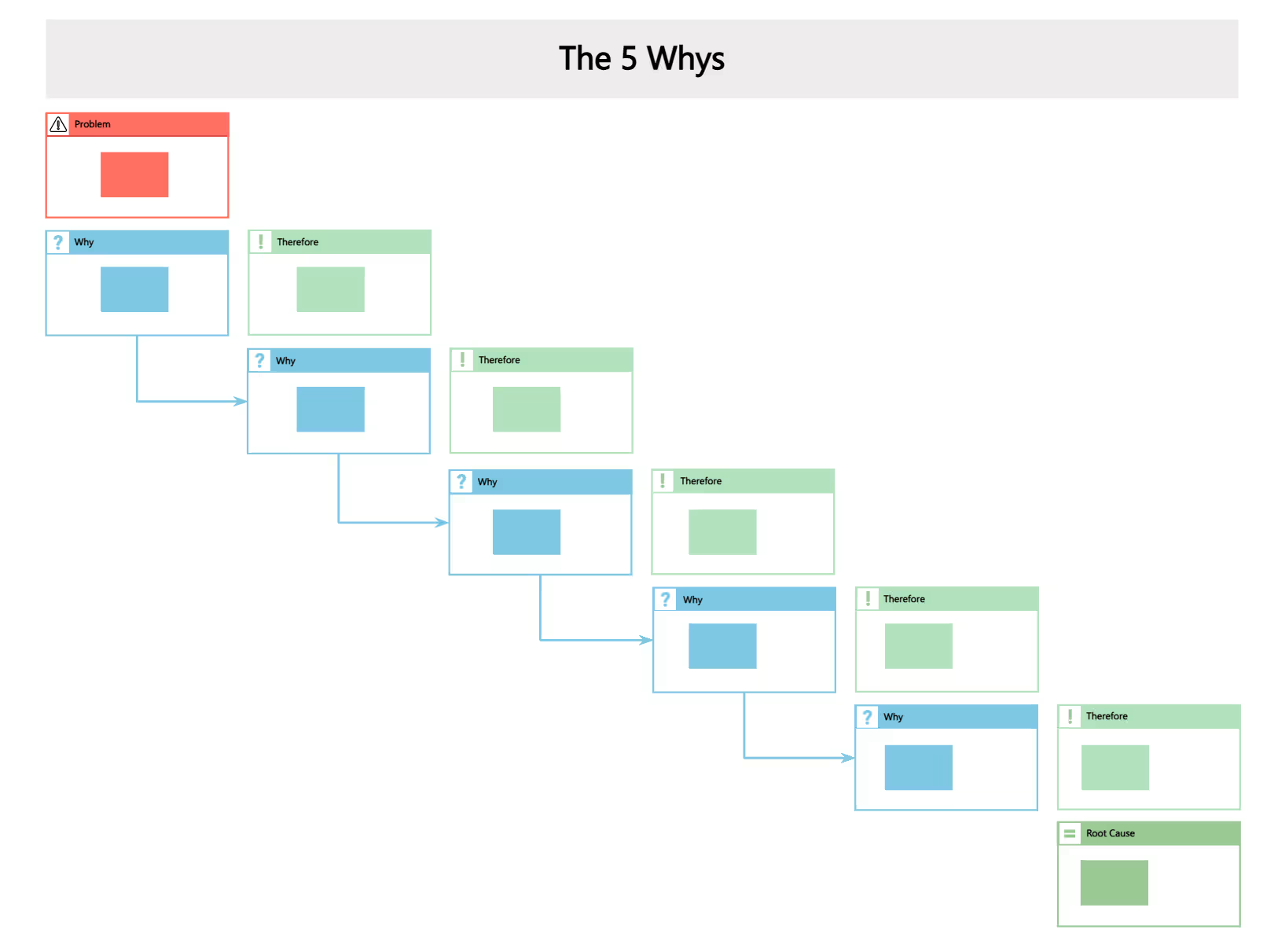
Describe the problem
Write the problem in the red box, as specifically as possible: what happens, where and since when?
Ask the first why
Ask why the problem occurs and write the answer in the green Therefore box next to it.
Follow the arrow
Take that answer as the new problem and ask why again in the next step down.
Stick to facts
Base each answer on facts or data, not on assumptions about people.
Name the root cause
Stop when you reach a cause you can act on, and write it in the Root Cause box. That may take fewer or more than five steps.
Agree on a measure
Decide what to change at the root cause, and check later whether the problem has gone.
What is the 5 Whys method?
The 5 Whys method finds the root cause of a problem by asking why several times in a row. Each answer becomes the starting point for the next why, until the team reaches a cause it can act on. The method comes from the Toyota Production System and is a staple of quality management.
An example in five steps
The example follows one illustrative scenario: customers receive their invoices late.
- Why 1 Why are invoices late? Because they are sent manually at the end of the month.
- Why 2 Why manually? Because the accounting software doesn't send them automatically.
- Why 3 Why not? Because automatic sending was never set up.
- Why 4 Why not? Because nobody was responsible for the software after the migration.
- Why 5: root cause Why not? Because the migration plan had no owner for ongoing operations.
For a full problem-solving process with containment and corrective actions, use the 8D report.
Problems worth asking five whys about
- Quality problems Find out why a defect keeps coming back.
- Process errors Understand why a workflow breaks down.
- IT incidents Analyze an outage after the immediate fix.
- Retrospectives Dig deeper into a problem the team keeps running into.
Asking why without blaming people
- Look at processes, not people If the answer is someone made a mistake, ask why the process allowed it.
- Check the chain backwards Read from the root cause upward: does each answer really lead to the next problem?
- Follow several causes separately If a why has more than one answer, follow each branch on its own.
- Involve the people affected Those who work with the process know the real causes best.
Why Collaboard
A Swiss-made online whiteboard for teams that care where their data lives.
Your data stays in Europe
Choose hosting in Switzerland, Germany or the EU, fully GDPR compliant. Or run Collaboard on your own servers.
Invite anyone with a link
Guests join your board for free, right in the browser. Nothing to install, no extra licenses for participants.
Made in Switzerland, with real support
Collaboard is developed in Switzerland. When you need help, you talk to people who know the product.
Frequently asked questions
Is the 5 Whys template free?
Yes, the 5 Whys template is free to use with a Collaboard account. The free plan includes up to 3 boards and five people per session.
Who developed the 5 Whys method?
The 5 Whys method was developed by Sakichi Toyoda, founder of Toyota Industries, and became an important part of the Toyota Production System.
Do I always have to ask why exactly five times?
No, five is a guideline in the 5 Whys method. Stop when you reach a cause you can act on.
When is the 5 Whys method not enough?
For complex problems with many causes, the 5 Whys method works best in combination with an Ishikawa diagram.
Can a team use the 5 Whys method together?
Yes, a team can use the 5 Whys method on a shared board, where everyone adds answers and evidence.
Start your next whiteboard now
Get a free trial of Collaboard with up to 3 boards and five people per session. All key features are available for you to try out.