Intuitive user interface where you can get started right away without much effort. No app to install, use it directly in your web browser.
KWL Chart Template
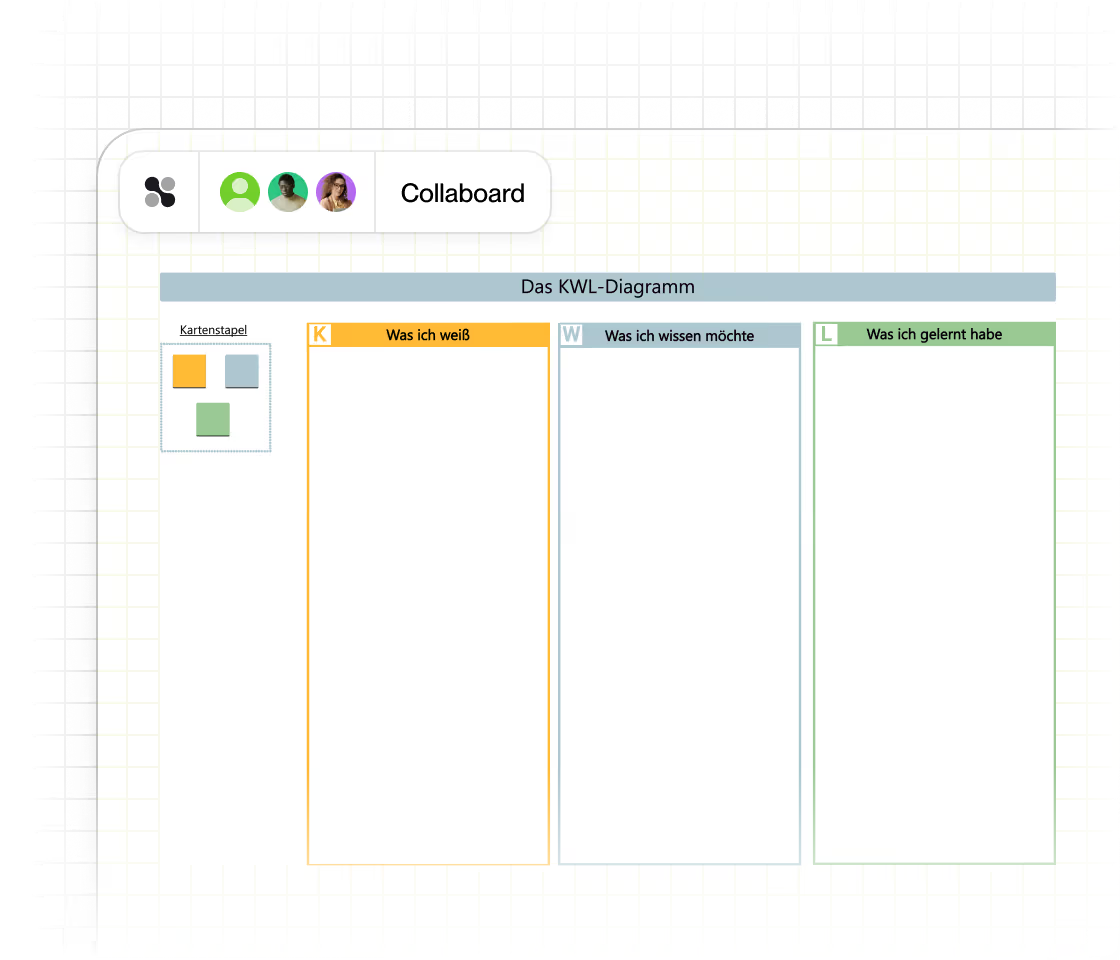
Create a KWL chart template in record time with just one click using our free template! This versatile educational framework allows students and educators alike to systematically organize their learning process through categorizing what they Know (K), what they Want to know (W), and what they have Learned (L) about a specific topic.
Start now with your KWL Chart for free on Collaboard!






































About the template for a KWL Chart
The KWL chart template provides a structured format for categorizing what students know, want to know, and have learned about a subject. It is designed for ease of use, promoting an organized approach to learning and teaching. The template can be adapted for various educational levels and subjects, facilitating an efficient learning process.
Collaboard offers you free KWL Chart Templates to fill in directly.
KWL Chart Templates in Collaboard
Over 2 million people trust Collaboard and use the online whiteboard and over 150 templates.
Why are KWL Charts important?
KWL charts play a pivotal role in the learning process for several compelling reasons:
- Enhances Metacognitive Skills: KWL charts encourage learners to reflect on their own knowledge and learning processes, fostering a higher level of thinking and self-awareness.
- Customizes Learning Pathways: By identifying what students already know and what they are curious about, educators can tailor lessons to meet individual or class-wide learning needs more effectively.
- Boosts Comprehension and Memory: Structuring learning around KWL charts helps students categorize information, aiding in better understanding and recall of the material learned.
What is a KWL Chart used for?
It serves several purposes in educational settings, enhancing the learning experience through structured exploration. KWL Charts examples uses are:
- Guiding Research Projects: By starting with what they know (K) and what they wish to learn (W), students can outline their research, using the chart to track their learning progress and fill it with new information (L) as they advance.
- Improving Reading Comprehension: A KWL chart can be used before reading to list questions or topics the student hopes to understand, which are then revisited after reading to fill in what was learned, effectively serving as a practical KWL chart example in action.
- Facilitating Classroom Discussions: By preparing a KWL worksheet, students can contribute more effectively to discussions, sharing their initial knowledge, their questions, and eventually, the insights they've gained, promoting a collaborative learning environment.
How to use the KWL Chart Templates in Collaboard
- Start by selecting the free printable KWL chart template from Collaboard's extensive template gallery, which offers various customizable options.
- Customize your template, making it an editable KWL chart that fits the specific needs of your subject or project.
- In the "Know" column, list everything you already know about the topic to establish a baseline for your learning journey.
- Use the "Want to know" section to specify questions or areas of interest, guiding the direction of your research or inquiry.
- As you discover new information, fill in the "Learned" section, transforming the blank KWL chart into a comprehensive record of your learning process.
Why Collaboard

Easy to use

Highest data security
Collaboard offers GDPR-compliant data hosting in Europe, Germany or Switzerland of your choice.

Numerous integrations
Collaboard can be easily integrated into your existing video conferencing and collaboration solution.
KWL Charts Template: Frequently asked questions and answers
Any questions? We are here to help.
A KWL chart is a graphic organizer that helps students and teachers structure the learning process by dividing knowledge into what they already know, what they want to know, and what they have learned.
The purpose of a KWL chart is to foster an active learning environment where students can visually organize their knowledge and questions, improving their understanding and retention of new information.
The three essential components of a KWL chart are "Know" (existing knowledge), "Want to Know" (questions or learning goals), and "Learned" (newly acquired information or understanding).
In education, a KWL chart is a powerful tool for activating prior knowledge, setting learning goals, and reflecting on acquired understanding, making it a dynamic part of the learning process.
To create a KWL chart, start with a template like the free printable or editable versions on Collaboard. Fill in the "Know" section with your initial knowledge, "Want to Know" with questions, and "Learned" with new insights as they are discovered.
Start your next whiteboard now
Get a free trial of Collaboard with up to 3 boards and five people per session. All key features are available for you to try out.