PEST Analysis Template
Look at the political, economic, social and technological factors that shape your market. The PEST analysis helps you understand the bigger picture before you plan your strategy.
Free to start · Swiss-made · GDPR compliant

How to use the PEST analysis template
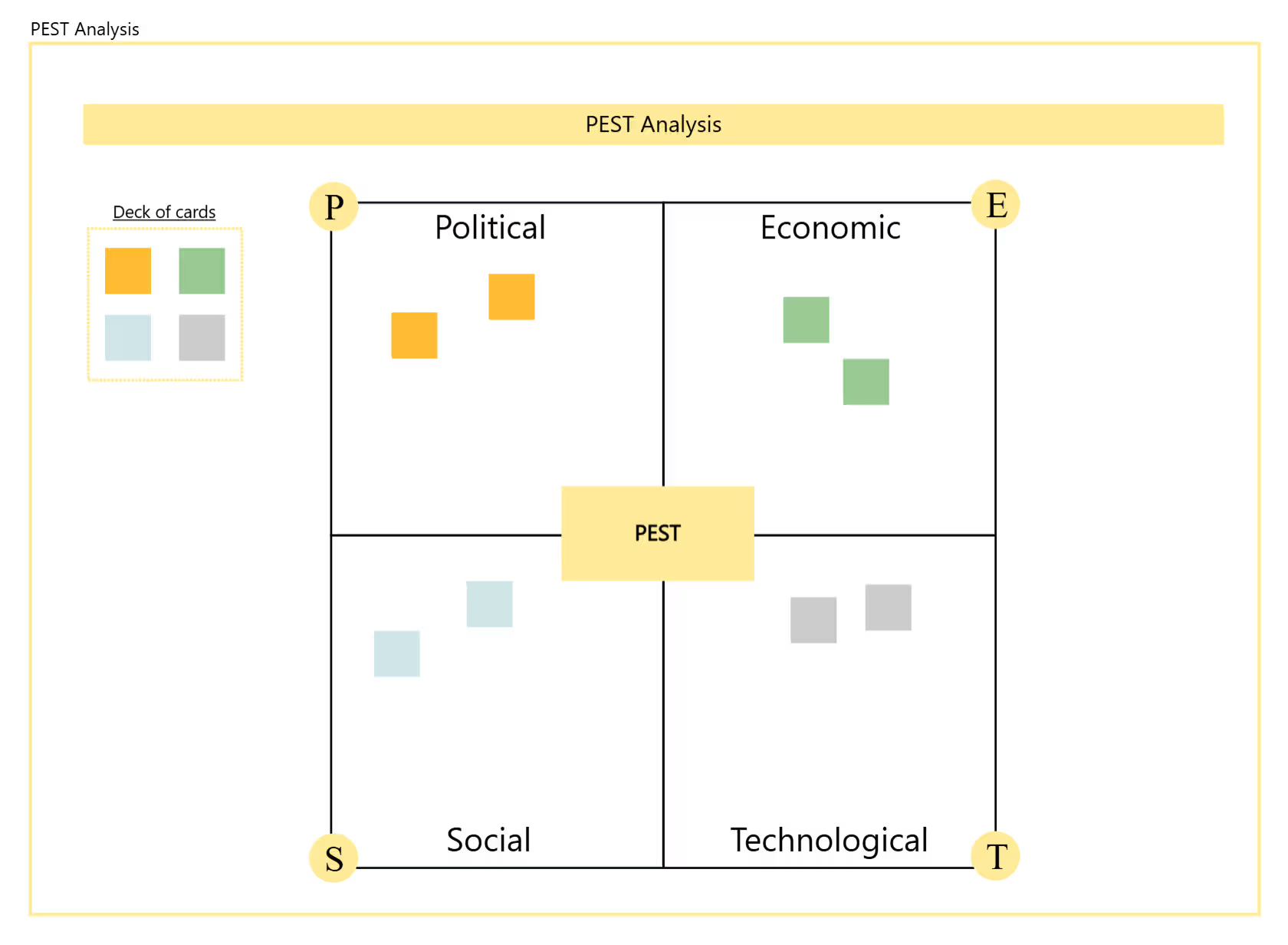
The Collaboard template divides the board into four quadrants around a central PEST label, with a deck of notes in matching colors: orange for political, green for economic, light blue for social and grey for technological. Two example notes in each quadrant show where to start.
Set the scope
Agree on the market, region and time frame you're looking at, for example the next three years in Switzerland.
Collect factors
Everyone adds factors on notes from the deck, using the color of each quadrant.
Focus on what's relevant
Remove factors that are true but don't affect your plan. A shorter list with real impact is more useful.
Rate the impact
Mark which factors could have the biggest impact, for example with a number from 1 to 3.
Derive opportunities and threats
Decide for each important factor whether it is an opportunity or a threat for your plan.
Plan next steps
Agree on how to respond, and carry the results into a SWOT analysis if needed.
What is a PEST analysis?
A PEST analysis examines the external environment of an organization or project in four areas: political, economic, social and technological factors. It is a quick way to spot developments that could affect a plan before they become a surprise.
The four areas of the template
The examples follow one illustrative scenario: a language school planning to offer online courses.
- Political Government policy, funding and regulation. Example: public subsidies for continuing education.
- Economic Economic conditions, prices and purchasing power. Example: companies cutting training budgets.
- Social Demographics, values and behavior. Example: more people learning on their phones in short sessions.
- Technological New technologies and infrastructure. Example: AI tools that translate in real time.
If environmental and legal factors matter for your topic, the PESTEL analysis adds both.
When to use this template
- Quick market scan Get an overview of the environment in one session.
- Before a SWOT analysis Collect the external factors first.
- New products or services Check whether trends support an idea or work against it.
- Teaching Introduce students to environmental analysis with a simple framework.
Tips for a good session
- Stay external Internal topics like your own team or budget belong in a SWOT analysis, not here.
- Look a few years ahead Factors that are already obvious today help less than developments that are just starting.
- Name your sources Note where a factor comes from, such as a study or a news report, so it can be checked later.
- Replace the example notes The notes already on the board show the format. Overwrite them with your own content.
Why Collaboard
A Swiss-made online whiteboard for teams that care where their data lives.
Your data stays in Europe
Choose hosting in Switzerland, Germany or the EU, fully GDPR compliant. Or run Collaboard on your own servers.
Invite anyone with a link
Guests join your board for free, right in the browser. Nothing to install, no extra licenses for participants.
Made in Switzerland, with real support
Collaboard is developed in Switzerland. When you need help, you talk to people who know the product.
Frequently asked questions
Is the PEST analysis template free?
Yes, the PEST analysis template is free to use with a Collaboard account. The free plan includes up to 3 boards and five people per session.
What does PEST stand for?
PEST stands for political, economic, social and technological factors, the four groups of external influences a PEST analysis looks at.
What is the difference between PEST and PESTEL?
PESTEL adds environmental and legal factors to the four PEST dimensions. A PEST analysis is quicker, a PESTEL analysis more complete.
How is a PEST analysis different from a SWOT analysis?
A PEST analysis looks only at the external environment, while a SWOT analysis also covers internal strengths and weaknesses. PEST results often feed into the opportunities and threats of a SWOT analysis.
How often should a PEST analysis be updated?
A PEST analysis should be updated whenever the market changes noticeably, and at least once a year as part of strategic planning.
Start your next whiteboard now
Get a free trial of Collaboard with up to 3 boards and five people per session. All key features are available for you to try out.