Customer Journey Map Template
Follow one customer through every stage of their journey, from first contact to recommending you. The customer journey map shows what they do, think and feel, where it hurts and what you can improve.
Free to start · Swiss-made · GDPR compliant
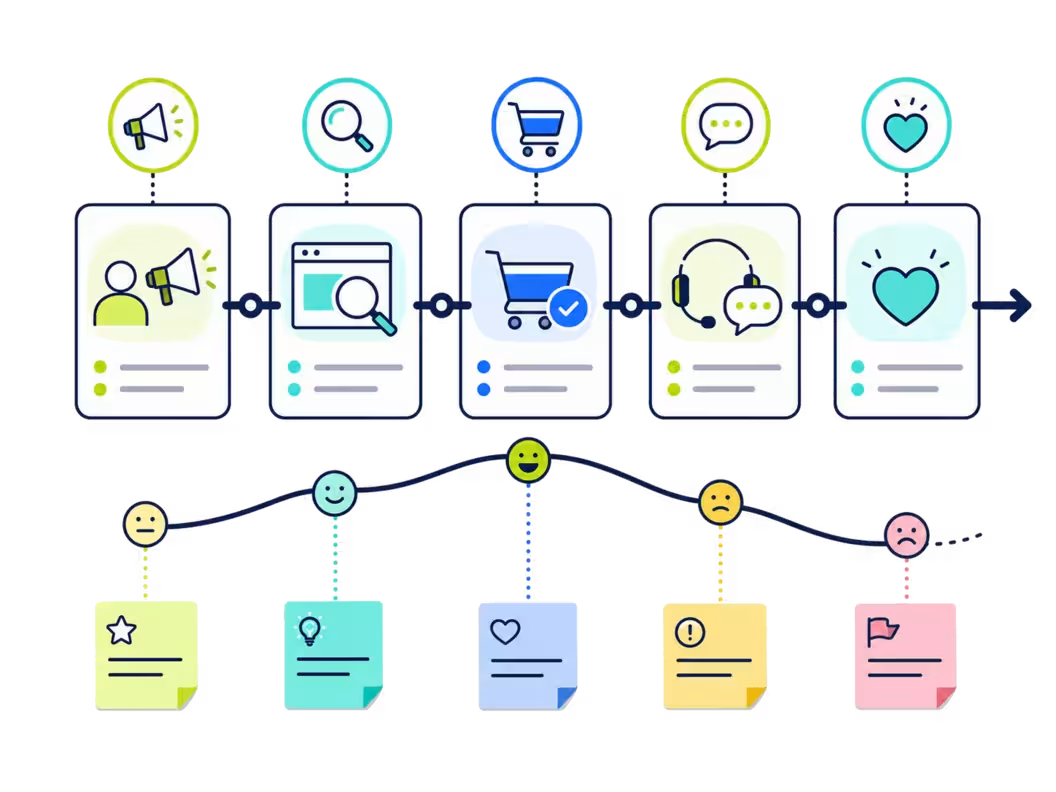
Mapping a customer journey stage by stage
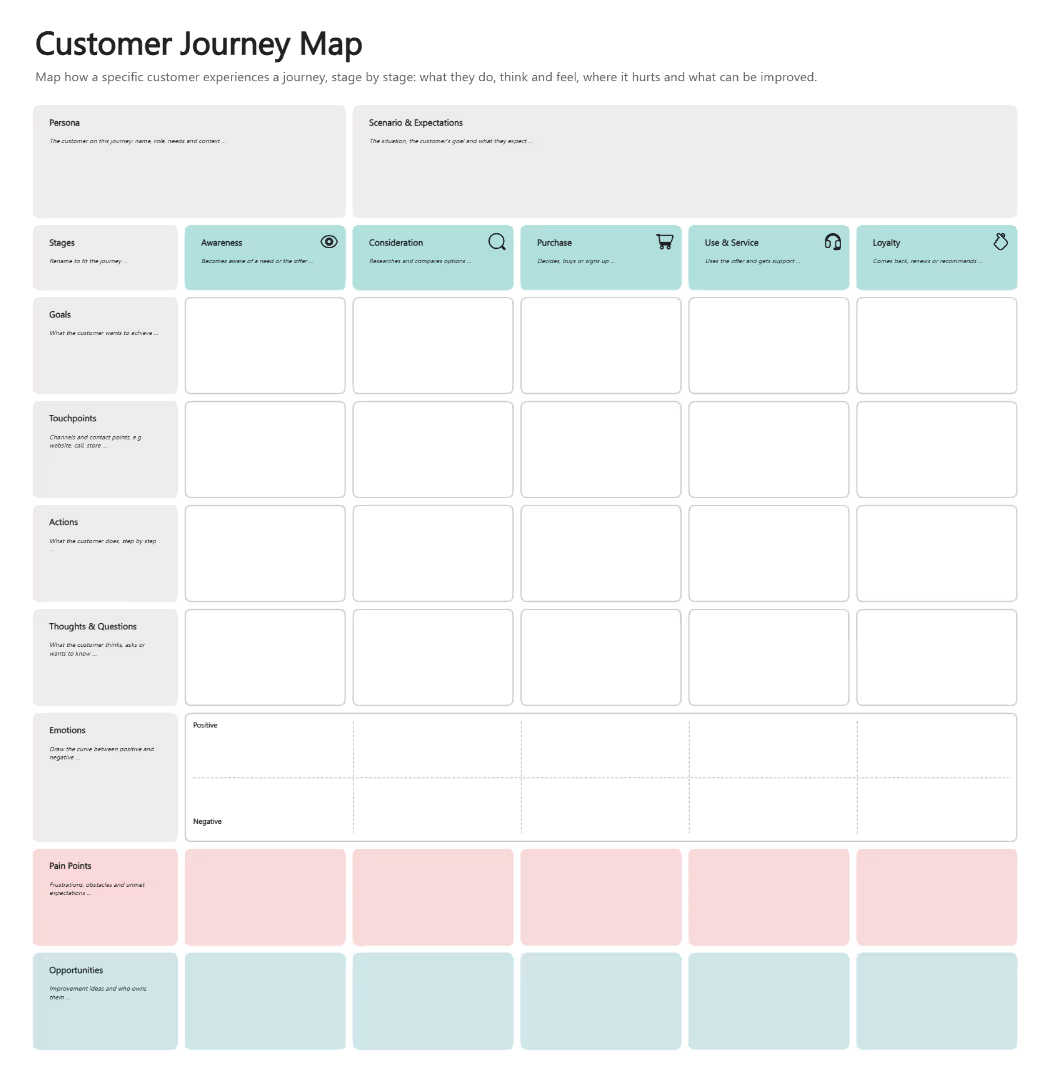
The Collaboard template is a grid with the five stages as columns and one row each for goals, touchpoints, actions, thoughts and questions, emotions, pain points and opportunities. At the top, two fields hold the persona and the scenario with the customer's expectations. The emotions row has a positive and a negative zone, so you can draw the curve across all stages.
Choose persona and scenario
Pick one customer and one concrete journey, and note what they expect. One map per persona keeps the story clear.
Adjust the stages
Rename or add stages so they match the real journey, for example onboarding instead of purchase for a software trial.
Map what the customer does
Fill in goals, touchpoints and actions stage by stage. Use interviews, support tickets and analytics, not only assumptions.
Add thoughts and emotions
Note the questions customers ask at each stage and draw the emotion curve. The low points show where to look first.
Mark the pain points
Collect frustrations and obstacles in the red row, directly below the stage where they happen.
Turn pain points into opportunities
Write improvement ideas in the bottom row, name an owner for each and agree which ones to tackle first.
What is a customer journey map?
A customer journey map shows how one customer experiences a journey with your organization, from the first contact to coming back or recommending you. Stage by stage, it captures what the customer does, thinks and feels, where things go wrong and what could be better. Because the whole journey is on one page, marketing, sales, product and service see the same picture instead of only their own part.
The rows of the template
The examples follow one illustrative journey: Tom, 42, buys an e-bike from an online bike shop.
- Persona and scenario Who is on the journey, in what situation and with which expectations. Example: Tom wants to commute by e-bike and expects honest advice and fast delivery.
- Stages Awareness, consideration, purchase, use and service, loyalty. Rename them to fit your journey. Example: in the consideration stage, Tom compares models and reads reviews.
- Goals, touchpoints and actions What the customer wants at each stage, where they meet you and what they do. Example: Tom books a test ride through the website.
- Thoughts and emotions Questions on the customer's mind and a curve between positive and negative. Example: excitement after the test ride, frustration when the delivery date moves.
- Pain points and opportunities What gets in the way and what you could improve, with an owner. Example: proactive delivery updates by text message.
Journey map, persona or service blueprint?
A persona describes who the customer is. A journey map follows that person through one concrete experience over time, so the two work best together. A service blueprint goes one level deeper and shows the internal processes and teams behind each touchpoint, which customers never see.
If you don't have a persona yet, start with the persona template. For a detailed guide with examples, read our article on customer journey mapping.
When teams map a customer journey
- Improving customer experience Find the moments where customers drop off or get frustrated.
- Aligning departments Give marketing, sales, product and service one shared view of the customer.
- Designing new services Map the intended journey before you launch a product or service.
- Onboarding and support Find gaps between the purchase and the first real success with your product.
Keeping a journey map grounded in reality
- One persona per map Mixing several customer types blurs the journey. Create a separate map for each.
- Map the current state first Document how the journey works today before designing the ideal one.
- Use real evidence Interviews, reviews and support tickets show what customers actually experience.
- Assign owners Opportunities without an owner rarely get done. Note who takes care of each one.
Why Collaboard
A Swiss-made online whiteboard for teams that care where their data lives.
Your data stays in Europe
Choose hosting in Switzerland, Germany or the EU, fully GDPR compliant. Or run Collaboard on your own servers.
Invite anyone with a link
Guests join your board for free, right in the browser. Nothing to install, no extra licenses for participants.
Made in Switzerland, with real support
Collaboard is developed in Switzerland. When you need help, you talk to people who know the product.
Frequently asked questions
Is the customer journey map template free?
Yes, the customer journey map template is free to use with a Collaboard account. The free plan includes up to 3 boards and five people per session.
What are the stages of a customer journey?
A customer journey usually runs through awareness, consideration, purchase, use and service, and loyalty. The template uses these five stages, and you can rename or add stages to fit your journey.
What is the difference between a customer journey map and a service blueprint?
A customer journey map shows the experience from the customer's point of view. A service blueprint adds the internal processes, systems and teams behind each touchpoint.
What information do I need for a customer journey map?
Customer interviews, support tickets, reviews, sales feedback and website analytics are good sources. Without real data, a journey map shows what the team assumes rather than what customers experience.
Should I map the current or the future customer journey?
Start with the current state to find real pain points. A future-state map then shows how the journey should look after the improvements.
Can I create a customer journey map with my team?
Yes, in Collaboard your team works on the same board in real time. Invite people from marketing, sales, product and support so every stage is covered.
Start your next whiteboard now
Get a free trial of Collaboard with up to 3 boards and five people per session. All key features are available for you to try out.